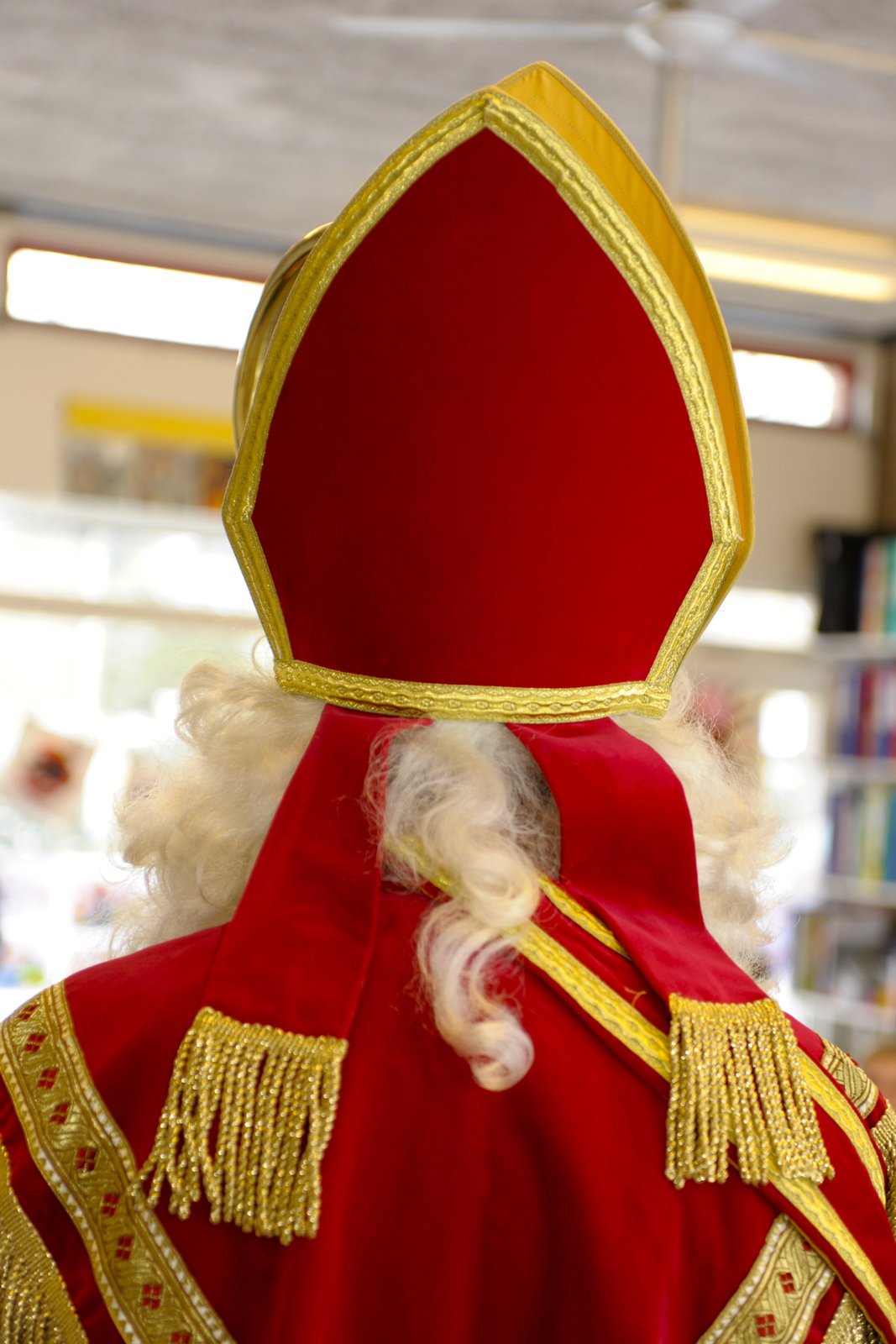
Sinterklaas sits at the center of Dutch December. You see him on chocolate letters, children’s drawings, office parties, and supermarket aisles. He is part history, part theater, and part national habit. The Dutch built a whole season around a bishop who rides a white horse across rooftops. The result is charming, chaotic, and sometimes messy.
The backstory starts in the fourth century. The real Saint Nicholas lived in what is now Turkey. He had a reputation for giving money to people in trouble. His legend sailed across Europe with traders and monks. The Netherlands turned him into Sinterklaas, a tall bishop in red robes who arrives by steamboat in mid November. He comes from Spain for reasons no historian can fully explain. Perhaps Spain seemed as far as the moon in long past Netherlands. The story stuck. It was fun and the Dutch liked the idea of one big arrival that kicks off winter.

The modern version follows a clear pattern. Stores start to fill with the chocolate letter “Ss” (tourists wonder if there was an overproduction of S, as all the letters appear (you too can be part of the experience) but there are SO MANY Ss. Sinterklaas lands in a different Dutch city each year. The event draws large crowds and national TV coverage. Children put shoes by the radiator at night with a carrot for Sinterklaas’s horse. Adults pretend they hear hoofbeats. Gifts appear. Everybody plays along.
The controversy centers on Zwarte Piet, or Black Pete. The character, which is said to be an African helper, started in the nineteenth century with clear racist imagery. Black-faced white Dutch roamed the streets. The country argued about it for years. Protests grew. Cities and broadcasters moved to soot marks, or rainbow Peter, on the face instead of full blackface. Many Dutch people accepted the change because the old version did real harm. The shift is ongoing. It shows how traditions can survive as long as they adapt.
Sinterklaas matters because he anchors the start of winter in a country that gets dark early. He gives families a point of connection. He gives children a shared story that passes from one generation to the next. The season drives economic activity. Retail groups track Sinterklaas spending because it shapes December sales. Schools plan lessons around his arrival. Workplaces hold gift exchanges. The whole country syncs up for a few weeks.
His power comes from something simple. He gives adults permission to be playful. He gives children a sense of magic. The tradition fits the Dutch style. Clear roles. Clear rituals.
Sinterklaas runs on a steady calendar. The season starts fast, builds energy, then stops on a single night. The Dutch follow this pattern every year, and the structure is part of why the tradition stays strong.
Here is the timeline and what you see across the country:
Mid November
The arrival happens on a Saturday in a selected Dutch city. Sinterklaas arrives by steamboat with his helpers. National TV covers it live. Crowds line the waterfront. Local brass bands play simple melodies. Kids wave homemade flags. Shops switch to Sinterklaas displays. Chocolate letters and pepernoten, small spiced cookies, show up everywhere.
The week after the arrival
Children start putting their shoes by the radiator or front door. They sing short Sinterklaas songs. They leave a carrot for the horse. Parents place small gifts in the shoes. Schools hand out coloring pages. Office chat shifts to who is buying presents early and who is waiting.
Late November
Workplaces plan “surprise” gift exchanges. These include handmade wrappings that hide the real gift. People write short poems that tease the person receiving the present. Supermarkets stock seasonal candy in bulk. Cities host small parades where Sinterklaas visits shopping streets.
Early December
TV shows run daily Sinterklaas programs. Children follow storylines that build toward the big night. Stores stay open later. Dutch rail staff sometimes dress in red hats. Primary schools hold special mornings where Sinterklaas visits classrooms. Kids prepare simple performances. Parents take photos. Teachers hand out spiced cookies and mandarins.
December 5, Sinterklaasavond
This is the main event. Families gather in the early evening. Someone knocks on the door. A sack of presents sits outside. No one claims credit. Adults read poems. Children open gifts first. The night runs on a clear rhythm. Gifts. Poems. Hot drinks. Laughter. By midnight the season ends.
December 6
Sinterklaas heads “back to Spain.” Decorations come down. The country shifts to Christmas within hours. Stores replace Sinterklaas items with holiday stock.
The importance of Sinterklaas comes from this steady ritual. Kids know exactly when the excitement starts. Adults enjoy a break from routine. The country aligns around one shared schedule. It gives winter a shape, and it gives Dutch families a sense of continuity. The rhythm of the season keeps people coming back each year.