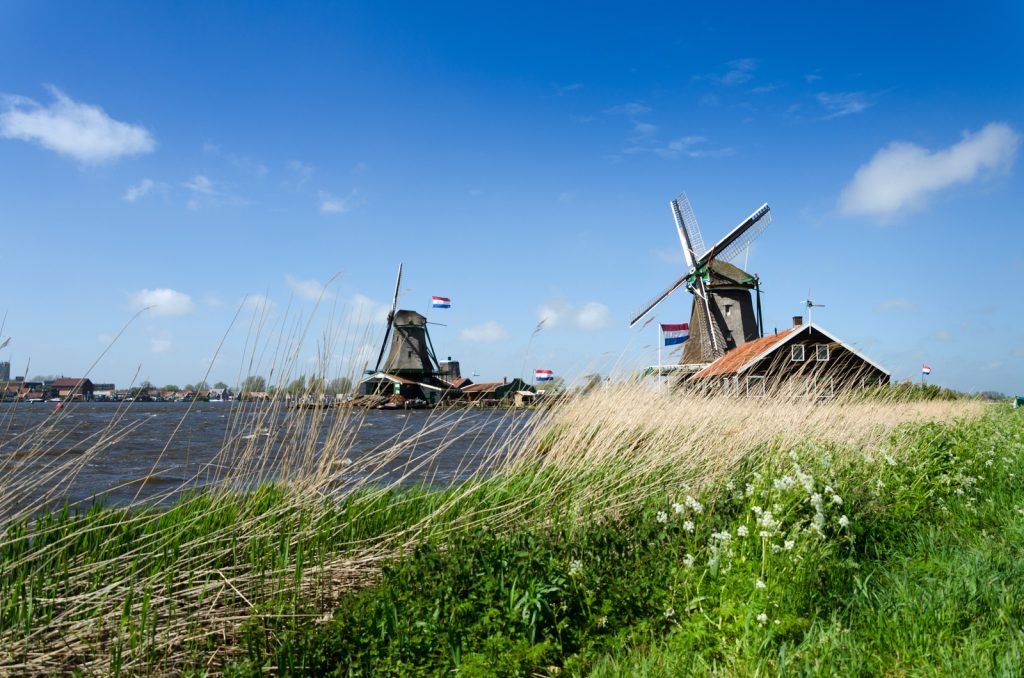
Fall in the Netherlands. That magical season when the leaves turn orange, the canals shimmer under gray skies, and your bike ride to work suddenly feels like an extreme sport. But let’s get one thing straight: the Dutch wind isn’t only from the windmills. Those iconic wooden giants aren’t secretly blowing air across the country like oversized fans. The truth is far gustier—and yes, a little science-y.
How Windy is the Netherlands Compared to Other “Windy Cities”?
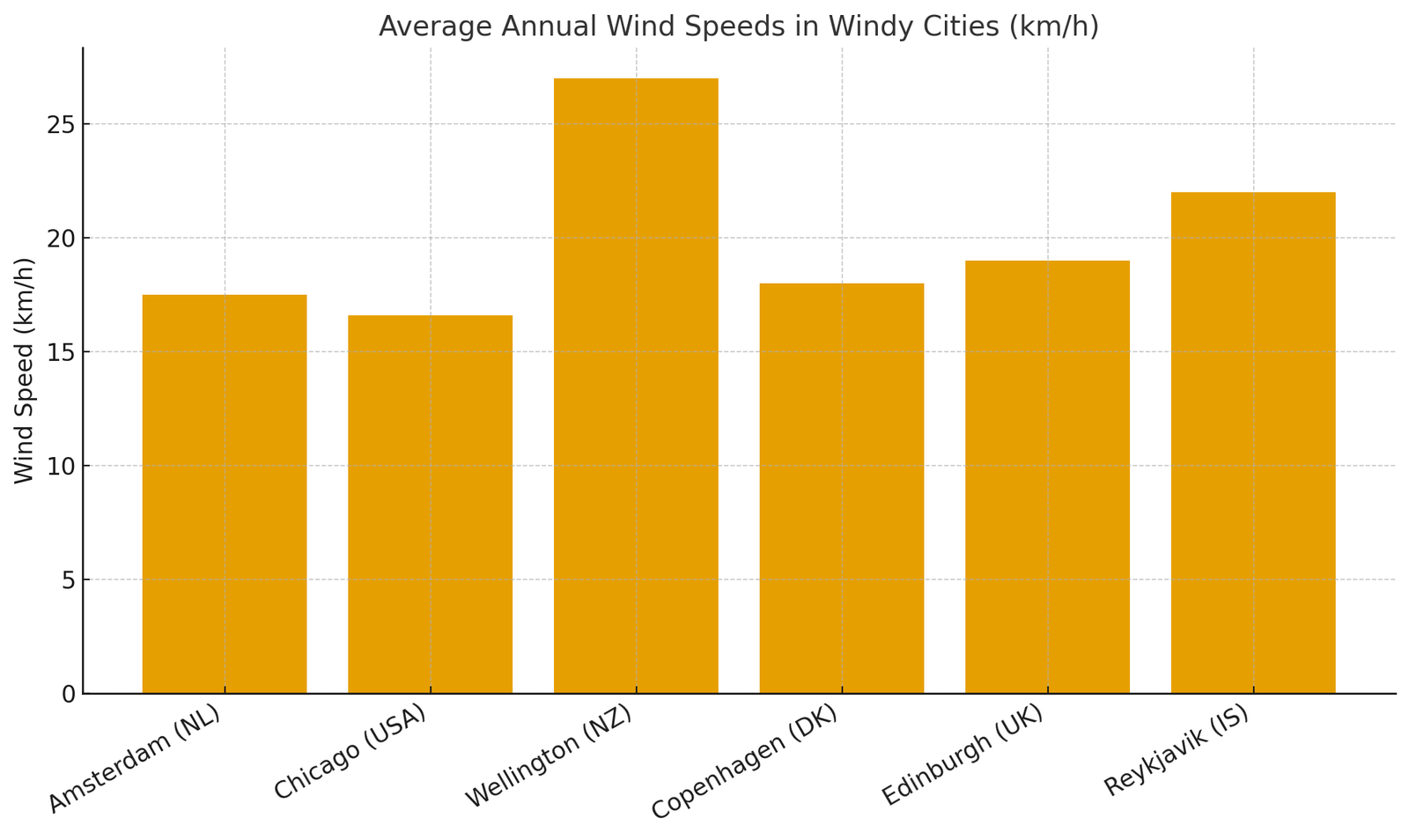
Despite Chicago’s nickname as “The Windy City”, it’s actually not the windiest. When you look at average annual wind speeds, the Netherlands holds its own among global gusty hotspots.
| City | Avg. Annual Wind Speed (km/h) | Fun Fact |
|---|---|---|
| Amsterdam (NL) | ~17.5 km/h | Your bike feels all 17.5. |
| Chicago (USA) | ~16.6 km/h | Nickname came from politics, not weather. |
| Wellington (NZ) | ~27 km/h | Officially the windiest capital in the world. |
| Copenhagen (DK) | ~18 km/h | Danes also bike head-first into gusts. |
| Edinburgh (UK) | ~19 km/h | Strong winds = surprises if you’re not wearing underwear.. |
| Reykjavik (IS) | ~22 km/h | Where the wind can politely rearrange your yard. |
Why Is It So Windy in the Netherlands in Fall?
1. Geography: Flat as a Stroopwafel
The Netherlands is famously flat. The highest “mountain” is the Vaalserberg, which peaks at 322 meters—a gentle bump compared to real mountains. With no terrain to block or redirect air currents, winds sweep straight across the lowlands at full force. It’s essentially Europe’s wind hallway.
2. The North Sea Effect
To the west lies the North Sea, which acts like a giant engine of autumn storms. In fall, the sea holds onto summer’s warmth longer than the air above it. Warm air rises, cold air rushes in, and voilà: turbulence, storms, and gusts that turn your bike ride into a trust exercise with physics.
3. Jet Streams & Storm Tracks
Every autumn, the polar jet stream (a fast-moving ribbon of air high in the atmosphere) shifts southward. This change steers Atlantic low-pressure systems right across Northern Europe—aka straight across the Netherlands. Meteorologists even call this period “storm season” (roughly October–March), when named storms like Corrie, Eunice, or Otto show up to rearrange garden furniture.
4. Historical Wind Partnership
The Dutch didn’t build windmills out of whimsy. For centuries, they relied on wind power to pump water, grind grain, and saw timber. The Dutch Golden Age shipbuilding industry? Supercharged by windmills. In other words, the Netherlands has always had wind in abundance—it was either learn to use it or get blown away.
What the Wind Means for Daily Life
- Cycling Drama
Ask any expat: biking in Dutch autumn feels like starring in your own slow-motion action film. Headwinds can cut your speed in half, while tailwinds turn you into a Tour de France champion—until you realize braking is suddenly optional. - Umbrella Graveyards
Somewhere in the Hague, there’s probably a landfill made entirely of broken umbrellas. Fun fact: KNMI (the Royal Netherlands Meteorological Institute) once ran campaigns reminding people that umbrellas don’t work in wind gusts over 60 km/h. That’s basically every Tuesday in November. - Architecture by Necessity
Ever notice how Dutch houses have narrow, tall facades? While originally influenced by tax codes, their sturdy, brick construction also helps withstand strong winds. Roof tiles are clipped down, and dikes are reinforced, because storms aren’t just inconvenient—they can push seawater inland.
How to Prepare for Fall Winds (Without Losing Your Sanity)
- Master the Cycling Stance
Lean forward, grip the handlebars, and accept that progress will be slow. Bonus tip: follow behind a Dutch giant who acts as a human windbreak. - Invest in Real Outerwear
Forget umbrellas—buy a waterproof, windproof jacket with a hood that actually stays on your head. Dutch brands like Rainkiss or AGU know the struggle. - Respect the Warnings
The KNMI issues color-coded weather alerts (yellow, orange, red). Yellow means “meh, hold onto your hat.” Orange means “probably cancel the BBQ.” Red means “stay inside, binge Netflix, and hope your bike is still where you left it.” - Secure Your Belongings
Garden chairs, trash bins, and inflatable flamingos all become airborne in storm season. Dutch news is full of reports of runaway trampolines every autumn. Tie it down—or risk giving your neighbor a free gift.
Fun Facts to Impress at Parties
- The Netherlands has one of the highest average annual wind speeds in Europe (about 17–18 km/h).
- Offshore wind farms now generate a large portion of Dutch renewable energy. The same winds that knock you off your bike are helping power your WiFi.
- In 2018, Storm Friederike hit the Netherlands with gusts over 140 km/h—enough to ground all trains and cause €90 million in damages.
- There’s even a Dutch word for strong, blustery fall weather: onstuimig. (Pronounced like your umbrella breaking in half.)
The Upside
Sure, Dutch autumn winds will make you question your life choices, your hair gel, and your bike gears. But without them, the Netherlands wouldn’t have iconic windmills, world-leading wind energy projects, or those viral YouTube videos of people walking diagonally down the street.
When a headwind tries to send you back to bed, remember: it’s not from the windmills. It’s the Netherlands giving you free resistance training—and maybe, a good story to tell.