Skip the umbrella, leave the small talk at home, and expect to be overtaken by an 80-year-old on an e-bike. Here is what actually helps.
Money and cards
1. Cash is basically a museum exhibit. About 80% of in-person payments in the Netherlands are made by debit card, and cash makes up roughly 20%, according to the Dutch Payments Association. Some museums and public toilets (yes, most public toilers are paid) are fully card-only.
2. Your credit card might get a polite no. Credit cards account for under 0.5% of point-of-sale payments, per the same source, so pack a debit card or a phone with Apple Pay or Google Pay as a backup, not a spare Visa.
3. Some supermarkets only take debit, not credit. A handful of Albert Heijn branches, especially smaller ones, will decline a foreign credit card outright, so do not assume plastic equals plastic everywhere.
4. Card terminals are getting faster than the queue. Contactless made up around 94% of electronic payments by the end of 2024, according to the Dutch Chamber of Commerce (KVK), so tapping a card or phone is the default, not the exception.
5. Tipping is optional, not invisible. Service is not automatically included, but the custom is to round up or add 5 to 10% for exceptionally good sit-down service, and nothing at all for counter service, according to DutchReview. Waiters make a liveable wage will not resent you for skipping it, and they will not chase you down the street either.
Bikes rule everything
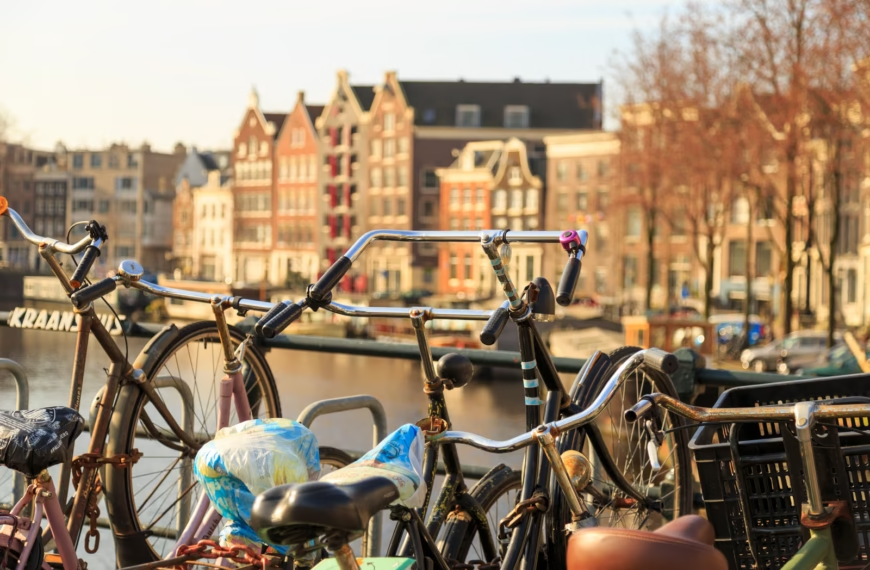
6. There are more bikes than the country’s population. Roughly 22.7 million bicycles were on Dutch roads as of 2021, according to BikeFair, in a country of about 18 million people.
7. In Amsterdam specifically, the bikes outnumber the humans by a wide margin. The city’s roughly 811,000 residents own an estimated 881,000 bicycles, per DutchAmsterdam, so on paper, every person owns more than one.
8. The bike lane is not a wide sidewalk. It is a highway. Nearly 40% of all trips in Amsterdam happen by bicycle, versus about 2% in the UK, according to the same source. Step into a red-paved cycle path while checking a phone and expect a bell, a shout, or both, or worse.
9. Bike theft is a genuine national sport. Just under 500,000 bicycles are stolen in the Netherlands every year, causing close to €600 million in damage, per BikeFair. Amsterdam alone saw over 10,800 reported thefts in a single recent year, according to NL Times. Rent a bike, do not buy a nice one, and use two locks.
10. Locking one wheel to a rack is basically a donation. Given the theft numbers above, a single cable lock through the front wheel is closer to a suggestion than a deterrent. Locals lock the frame to something fixed.
11. Bikes have their own right of way, and they use it without hesitation. Cyclists expect cars, trams, and pedestrians to yield at the appropriate points, and they will not slow down to check whether a tourist has noticed.
12. Renting one is easy, riding one gracefully takes practice. Most cities have rental shops near stations, but hand signals, braking with pedals on older Dutch-style bikes, and not swerving into the bus lane all take a day or two to get comfortable with.
Language and the famous directness
13. Almost everyone speaks English, and speaks it well. The Netherlands ranked first out of 123 countries and regions in the 2025 EF English Proficiency Index, ahead of Croatia, Austria, and Germany. Ordering coffee in English is not a problem anywhere touristy.
14. That does not mean Dutch effort goes unnoticed. A badly pronounced “dank je wel” still lands better than assuming everyone should just switch to English on command.
15. “That’s a stupid idea” is a compliment, sort of. Dutch communication culture prizes direct, unhedged feedback as a form of respect and honesty, not rudeness, according to Dutch on Track. Do not take it personally when a shop assistant tells you flatly that the jacket does not suit you, but don’t be surprised if you reply back and the Dutch are shocked at your behavior.
16. Small talk is treated as inefficient, not friendly. Dutch workplace and social culture tends to skip the warm-up and go straight to the point, per GConnection, so a cashier who does not ask how your day is going is not being cold. That is just Tuesday.
17. Disagreement is a normal part of a nice conversation. Being told “no, I don’t think that’s right” mid-chat is not a red flag; it is closer to real engagement than a British “that’s an interesting point.”
Weed, tolerance, and what is actually legal
18. Coffeeshops sell cannabis, not coffee. Regular cafés serve espresso; coffeeshops sell cannabis and hash to anyone 18 or older with valid photo ID, per DutchReview. Do not order a cappuccino at the wrong one and wonder why the menu looks strange.
19. There is a legal purchase limit. Coffeeshops can sell up to five grams per transaction, according to the same source, and taking any of it across a Dutch border is a criminal offense regardless of the amount.
20. Amsterdam (and there is a lot more to the Netherlands than only Amsterdam) still lets tourists buy, but not everywhere does. Cities including Maastricht restrict coffeeshops to residents of the Netherlands, Belgium, and Germany, according to Cannabis Travel. Do not assume the rules from Amsterdam apply nationwide.
21. Public smoking has real limits. Smoking cannabis outdoors in areas like Amsterdam’s Dam Square, Damrak, and the Red Light District carries a €100 fine, per Coffeeshop Relax. A coffeeshop terrace is fine. The middle of a tourist square is not. That said, you will undoubtedly encounter “the odor of the Netherlands” almost everywhere.
Windows, houses, and the built environment
22. Nobody closes their curtains, and it is not an accident. Leaving windows uncovered, even at night, is a well-documented Dutch habit, discussed at length by CNN and DutchReview, with theories ranging from Calvinist “nothing to hide” values to simply wanting the light in. Resist the urge to stare. Or don’t, but keep walking while you do it. Like the prostitutes in the red light districts, if you’re not there for business, keep on walking. NEVER take pictures of the inside of people’s house OR the prostitutes.
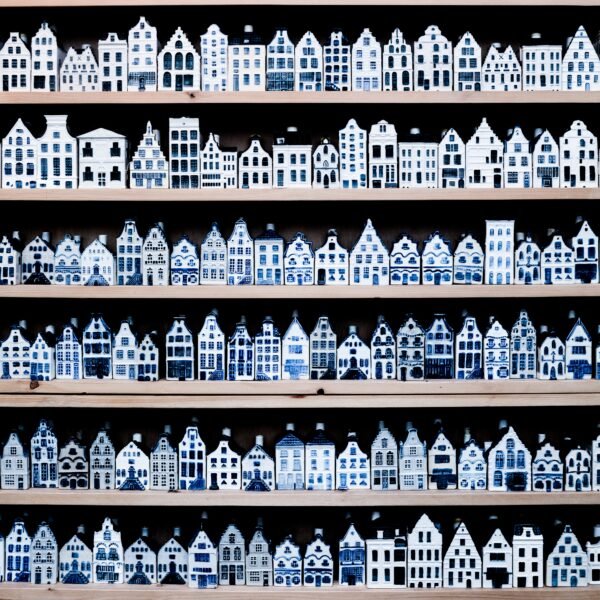
23. Canal houses are narrow because of an old tax loophole. Amsterdam property owners were once taxed on the width of their canal frontage, so builders went narrow and deep instead of wide, according to Expatica. The result is some of the skinniest architecture in Europe.
24. That hook sticking out of the roof is not decorative. It is a hoisting beam, used for centuries to haul furniture through upper-floor windows because the staircases are too narrow and steep for a sofa, per DutchReview. Movers in Amsterdam still use them today.
25. Houses lean forward on purpose, mostly. Some tilt was required by old building codes so hoisted goods would not scrape the facade; other tilting is just centuries of settling into soft, waterlogged ground, according to Expatica. Either way, it is normal, not structurally alarming.
26. Staircases are not built for luggage, or for tall people. Narrow, steep, almost ladder-like stairs are standard in older canal houses. The standard hook-like structures on top of buildings are to lift things even now. Book a hotel with an elevator if a suitcase and a bad back do not mix.
Trains, trams, and getting around
27. Public transport runs on tap-in, tap-out, no exceptions. Whether using an OV-chipkaart or a contactless bank card, forgetting to check out at the end of a journey means paying the maximum deposit rather than the actual fare, per Wikipedia’s OV-chipkaart entry. That deposit can run as high as €20 on trains.
28. A contactless bank card now works directly on the system. The share of Dutch public transport passengers using a payment card instead of a dedicated transit card rose from 40% to 50% between 2024 and 2025, according to the Dutch Payments Association. A physical OV-chipkaart is no longer required unless you want to get a travel plan, which really is only for residents anyways.
29. Trains are frequent, reliable, and unforgiving of a missed transfer. Dutch rail runs on a dense, tightly timed network, and connections are often just a few minutes apart. That is a feature for locals and a stress test for anyone unfamiliar with the platform layout at Utrecht Centraal. Don’t freak if you miss a connection. There’s almost always another way around, and Google maps works fine. If you want to feel Dutch, download the NS (the national train company) app.
30. Self-checkout machines dominate stations and supermarkets. Scan-and-pay kiosks are common at train station shops and larger grocery chains, according to Holland.com, which speeds up queues but occasionally trips up visitors unfamiliar with the machines. Don’t be surprised if the machine stops and calls a clerk before paying to make sure you’re being honest. This is standard and happens to nearly everyone at least once a week.
Food and drink
31. Dutch fries come with mayonnaise, not ketchup, by default. Asking for ketchup is not forbidden, but the standard order is fries with mayo, sometimes stacked with peanut sauce and onions in a combination called “oorlog,” or war.
32. Cheese is not a garnish here. It is a food group. Gouda and Edam are national exports, and cheese markets in towns like Alkmaar are still worth the detour, not just a photo op with a man in clogs or the giant clogs that still provide amusing pictures.
33. Stroopwafels taste dramatically better fresh and warm. The syrup-filled waffle cookie sold in supermarkets is a pale imitation of one bought hot off a street market griddle, where the caramel filling is still soft. One is a meal.
34. “Gezellig” does not translate into one English word. It roughly covers cozy, convivial, and pleasant all at once, and Dutch people will use it constantly to describe everything from a candlelit dinner to a crowded pub. Nodding along is a fine response until it clicks. “Lekker” means yummy, great and a whole group of meanings, and can be used for everything from food to sex.
35. Most bars close earlier than later, unless it’s a licensed club or event, and it is enforced. The Dutch have to get up for work as well.
Weather and practicalities
36. Rain is not a special occasion. It is Tuesday. The country sits at sea level on the edge of the North Sea, and a genuinely dry week in any season is closer to luck than expectation. A packable rain jacket earns its keep more than an umbrella, which the wind will destroy anyway. In summer, don’t be surprised at drought, though. Climate change has come to the Netherlands as well.
37. Wind, not cold, is usually the real enemy. Flat terrain and coastal exposure mean a 12°C day with strong wind feels far colder than the thermometer suggests. Layers beat a single heavy coat.
38. “Holland” is not the same as “the Netherlands,” technically. Holland refers to just two of the country’s twelve provinces, North and South Holland, though the terms get used interchangeably in casual conversation, including by locals. However, when it comes to football, than Holland is inexplicably correct.
39. The country really is below sea level in large parts. A significant share of Dutch land sits below sea level and depends on dikes, pumps, and centuries of water management to stay dry, which explains the national obsession with drainage infrastructure that seems excessive until it very much isn’t. The “water board” is the oldest still functioning bureaucratic office on the planet.
40. Sundays used to mean closed shops. That is changing, unevenly. Sunday retail hours vary by city and are expanding but still inconsistent; smaller towns may have far fewer businesses open than Amsterdam or Rotterdam.
Social customs and unwritten rules
41. Birthdays are congratulated to everyone in the room, not just the birthday person. Walking into a Dutch birthday gathering means shaking hands or offering cheek kisses to every single guest, congratulating them on the birthday of someone they may not even be related to. It is an actual, widely followed custom, not an exaggeration for tourists, and skipping it looks odd.
42. Three cheek kisses, not two. The standard greeting among friends and family is three kisses, alternating cheeks, starting on the right. Miscounting produces an awkward fourth lean-in that everyone has experienced at least once. Get it right, though, and you feel amazingly continental and confident.
43. Splitting the bill is not stinginess. It is standard practice. “Going Dutch” is a stereotype rooted in real behavior: separate bills at a group dinner are common and not considered rude or cheap, and sometimes you pay at the register, not at the table. Ask the waiter.
44. Punctuality is taken seriously for appointments, less so for parties. Arriving exactly on time, or a few minutes early, is expected for business meetings, dinners and doctor’s appointments. Arriving exactly on time to a house party, though, can mean awkwardly watching the host finish setting the table.
45. King’s Day turns the entire country orange, briefly and loudly. On April 27, cities fill with street markets, live music, and a sea of orange clothing to mark the King’s birthday, and Amsterdam in particular becomes almost impossible to move through on foot or by bike, which are largely banned in the center on that day.
46. Sinterklaas, not Santa, brings the main gifts. The Sinterklaas holiday on December 5 remains the bigger children’s gift-giving tradition in much of the country, ahead of the international Christmas Day version most visitors expect.
Miscellaneous facts worth knowing
47. The Dutch are, on average, the tallest people on Earth. Dutch men average around 183 cm and Dutch women around 170 cm, the tallest national averages recorded anywhere, according to a large 2020 study published in The Lancet and covered by NetherlandsInsiders. Standard doorframes elsewhere may feel unusually low by comparison.
48. Public urination and littering fines are real and enforced. City centers, especially in Amsterdam, actively fine for public urination, littering, and open-container violations in restricted zones. A night out that seems harmless elsewhere can end with an on-the-spot fine here. Don’t be shocked by public, open toilets. They’re there for a reason.
49. “Doe normaal” is close to a national motto. It translates loosely to “act normal” or “just be normal,” and it captures a broader cultural discomfort with showing off, boasting, or drawing excessive attention to oneself, directness in speech notwithstanding. That said, don’t be shocked by King’s Day or pride month, especially in Amsterdam.
50. Everyone will have an opinion about your itinerary, and they will share it unprompted. Ask a Dutch person for a restaurant recommendation and expect a full, unsolicited rundown of what to skip, what’s overpriced, and what tourists always get wrong. It usually comes from a real desire to help, filtered through the same directness covered in item 15.
Sources
- Dutch Payments Association, “Card Payments”
- KVK, “PIN or Cash? Payment Trends at the Checkout”
- DutchReview, “A Guide to Tipping Culture in the Netherlands”
- BikeFair, “Bicycle Theft in the Netherlands”
- NL Times, “Dutch Bike Thefts Soar to Set New Record High”
- DutchAmsterdam, “Amsterdam: City of Bikes”
- EF Education First, “EF English Proficiency Index”
- Dutch on Track, “Why Are Dutch People So Direct?”
- GConnection, “Direct Communication: Speaking Your Mind in Dutch Work Culture”
- DutchReview, “The Ultimate Guide to Smoking Weed in Amsterdam”
- Cannabis Travel, “Netherlands Tourist-Friendly Coffeeshop Guide”
- Coffeeshop Relax, “Will Tourists Be Allowed to Buy Weed in Amsterdam in 2026?”
- CNN, “Why Dutch People Don’t Mind You Staring Into Their Homes”
- DutchReview, “Dutch Quirk #46: Never Close Their Curtains”
- Expatica, “Why Does Amsterdam Have So Many Crooked Houses?”
- DutchReview, “Amsterdam Canal Houses: Why Are They So Wonderfully Weird?”
- Wikipedia, “OV-chipkaart”
- Holland.com, “ATMs, Tipping, and Credit Cards”
- NetherlandsInsiders, “Are the Dutch the Tallest in the World?”
- RealClearScience, “How Did the Dutch Become the Tallest People on Earth?”