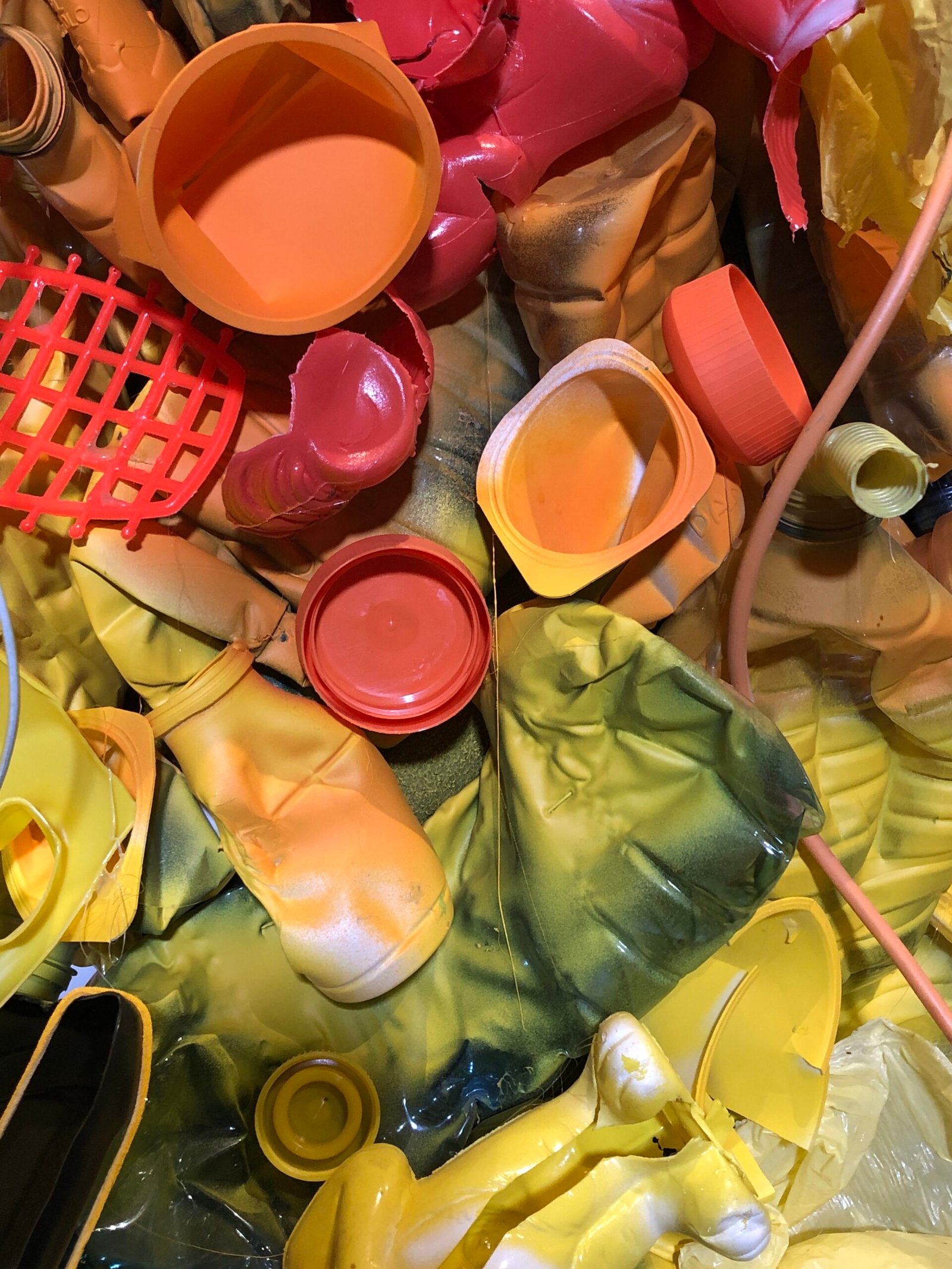
Walk into a PLUS or an Albert Heijn in any Dutch town and the produce aisle tells a strange story. Bell peppers, individually shrink-wrapped. Limes netted in plastic bagging. This is happening in a country that consistently tops European league tables for recycling, cycling, water management, and general environmental competence. The contradiction is real, and it says something useful about how “sustainable” a place can look from a distance versus what its bins actually contain.
The numbers behind the reputation
The Netherlands has genuine bragging rights here. According to Eurostat’s 2023 packaging waste figures, the country recycled 75.8 percent of all packaging waste that year, comfortably clearing the EU’s 2030 target of 70 percent and trailing only Belgium among member states. Packaging body Verpact reports an even higher figure for 2024 — 88 percent of all packaging placed on the market recycled or reused, against a legal target of 72 percent.
But that headline number hides enormous variation by material. Glass, paper, cardboard, and metal are handled almost as well as any system in the world manages. Plastic is the laggard, and by a wide margin.
| Material | Dutch recycling rate | Source |
|---|---|---|
| Glass | Above 90% collection | Milgro |
| Metal | Around 95% | Milgro |
| Paper and cardboard | Around 80% | Milgro |
| Plastic packaging | 45–49% | Eurostat / Milgro |
| Plastic actually reprocessed into new packaging | 7% | RIVM |
That last line is the one worth sitting with. A 2024 study by RIVM, the national public health and environment institute, found that only 7 percent of Dutch plastic packaging is turned back into new packaging material. Collection rates and recycling rates are not the same thing — plastic can be “recycled” on paper while most of it is downcycled into lower-grade products or simply burned. The government’s stated goal is a fossil-free packaging supply by 2050. RIVM’s researchers, working with Utrecht University, Rijkswaterstaat, and TNO, concluded that goal is currently out of reach without a change in both industry practice and consumer behavior.
Why the plastic keeps coming
Part of the answer is retail habit. Research from the Plastic Soup Foundation found that more than 80 percent of Albert Heijn products carry single-use plastic packaging, prompting a formal complaint to the Dutch financial markets regulator, filed jointly with the environmental law group ClientEarth, over the company’s non-financial reporting. The shrink-wrapped pepper phenomenon has become something of an internet meme outside the country — a widely shared photo of individually wrapped peppers at a PLUS store made the rounds on social media as an example of a “sustainability-branded” country doing something that looked anything but.
There are practical justifications, and they’re not nothing. Film wrap slows spoilage, reduces bruising in transport, and lets stores sell precise portion sizes to shrinking households. RIVM’s own modeling points to that last factor directly: the growth of single-person households is pushing packaging demand up, not down, because smaller households buy in smaller units that each need their own wrapper. Add in the boom in ready meals, meal kits, and on-the-go food, and TNO’s projection is that demand for plastic packaging will rise another 17 percent if nothing changes.
Not every retailer is standing still. Some Jumbo stores have dropped the plastic tray from own-brand sliced meat packaging, and the chain’s organic milk has been sold in cartons without a plastic cap for a couple of years, saving a modest but real amount of material. Amsterdam’s Ekoplaza made international headlines back in 2018 for opening what it called the world’s first plastic-free supermarket aisle. These are real efforts. They are also, by scale, a rounding error against what the big four supermarket chains move through their stores every week.
Where the plastic actually goes
Here is where the system gets genuinely confusing, even for residents. Most Dutch households (it depends on the municipality – Amsterdam no longer separates) sort a category called PMD — plastic, metal packaging, and drink cartons — into a separate bag or bin, alongside paper and glass. General waste (restafval) goes into underground containers, the ones visitors sometimes mistake for storm drains or utility access points, that empty into trucks below street level.
From there, a large share of Dutch waste, sorted and unsorted alike, ends up at one of the country’s waste-to-energy plants. The Netherlands operates eleven of them, and they are efficient by the standards of the technology: Amsterdam’s AEB facility alone generates roughly a million megawatt-hours of electricity a year, and Dutch incinerators collectively supplied about 18 petajoules of heat in 2022, some of it piped into district heating networks and greenhouses, according to a government-commissioned study on waste taxation.
That efficiency is also the catch. Because incinerators need a steady fuel supply to keep turbines running and heat networks warm, the Netherlands has historically imported waste from abroad to burn — at one point, roughly a quarter of the material feeding Amsterdam’s incinerator arrived from the UK, drawn by gate fees far lower than landfill costs there, as one visiting Australian waste-industry writer documented after touring the plant. A system built to avoid landfill has, in effect, created infrastructure that wants to keep burning. The Netherlands still imported around 1.1 million tonnes of waste for incineration in 2022, even as it exported a similar volume, according to the same waste-tax study.
None of this makes Dutch incineration reckless — landfill is nearly eliminated here, which is its own environmental win, and the heat recovery is real. But it complicates the tidy story of a nation that simply recycles everything responsibly. Or does it? A lot of what doesn’t get sorted, and even some of what does, is turned into ash and electricity rather than new bottles and tubs.
The other surprises behind the green reputation
Packaging isn’t the only place where the postcard version of Dutch sustainability runs into a messier reality. A few other examples worth knowing, especially for anyone arriving with an idealized picture:
- The nitrogen crisis. Since a 2019 court ruling found the government was failing to protect nature reserves from nitrogen pollution, the Netherlands has been gridlocked over intensive livestock farming, which the Dutch Organisation for Applied Scientific Research identifies as the source of roughly 61 percent of the country’s nitrogen compounds. The Netherlands emits more reactive nitrogen per hectare than any other EU country. Farmers have staged some of the largest protests in modern Dutch history in response to proposed livestock reductions.
- A manure surplus with nowhere to go. As EU derogations on manure spreading expire, Dutch dairy farms are projected to generate a surplus of roughly 95 kilotonnes of nitrogen by 2026 that fields can no longer absorb, according to the Dutch Center for Valorisation of Manure. Wageningen University estimates the national dairy herd may need to shrink by 10 to 30 percent by 2030 to bring the system back into balance.
- PFAS litigation. Collective legal action over PFAS contamination is now working its way through Dutch courts alongside the nitrogen cases, a sign that “forever chemical” pollution is not just an American or a Belgian problem.
Holding both things true at once
None of this erases what the Netherlands does well. Its cycling infrastructure, its water management, and its overall packaging recycling rate really are among the best in Europe, and the country is one of the few with a legal target that counts reuse alongside recycling — a distinction most countries don’t bother making. But a place can be genuinely good at sustainability and still ship shrink-wrapped peppers by the tonne, still burn a meaningful share of its own and other countries’ rubbish for heat, and still be locked in a decade-long fight over how many cows a small, waterlogged country can reasonably hold. The Dutch reputation for environmental competence is largely earned. It just isn’t complete, and the gap between the image and the bin is worth knowing about before assuming every green flag here is what it looks like from the outside.
Sources
- Eurostat, Packaging waste statistics (2023 data)
- Verpact, Our circularity results
- Milgro, Recycling in the Netherlands, Belgium and the EU
- RIVM, Recycled plastic packaging in the Netherlands still falls short
- ClientEarth, Supermarket group faces challenge over plastic failings
- The Cool Down, shopper photo of shrink-wrapped peppers
- Euronews, Dutch supermarket launches “world’s first” plastic-free aisle
- Rijksoverheid, Impacts of the reform of the waste tax and CO2 levy for waste incinerators
- The Fifth Estate, Recycling and incineration surprises in the Netherlands
- Wikipedia, Nitrogen crisis in the Netherlands
- Wikipedia, Dutch manure crisis