
Muiderslot
The Netherlands has plenty of ghosts, and most of them are younger than the events they are blamed on. A count murdered in 1296, a mayor’s breakdown in the 1680s and a devil’s bargain printed in an almanac in 1842 all produced hauntings. In each case the ghost showed up after the story, sometimes by centuries, and usually through a poet, a playwright or a tour operator.
That makes the backstory the useful part. The chart below covers nine places, the grudge behind each haunting, and how much evidence stands behind the story. The sections after it run roughly from best documented to least.
| Place | Province | Resident ghost | The grudge | Paper trail |
|---|---|---|---|---|
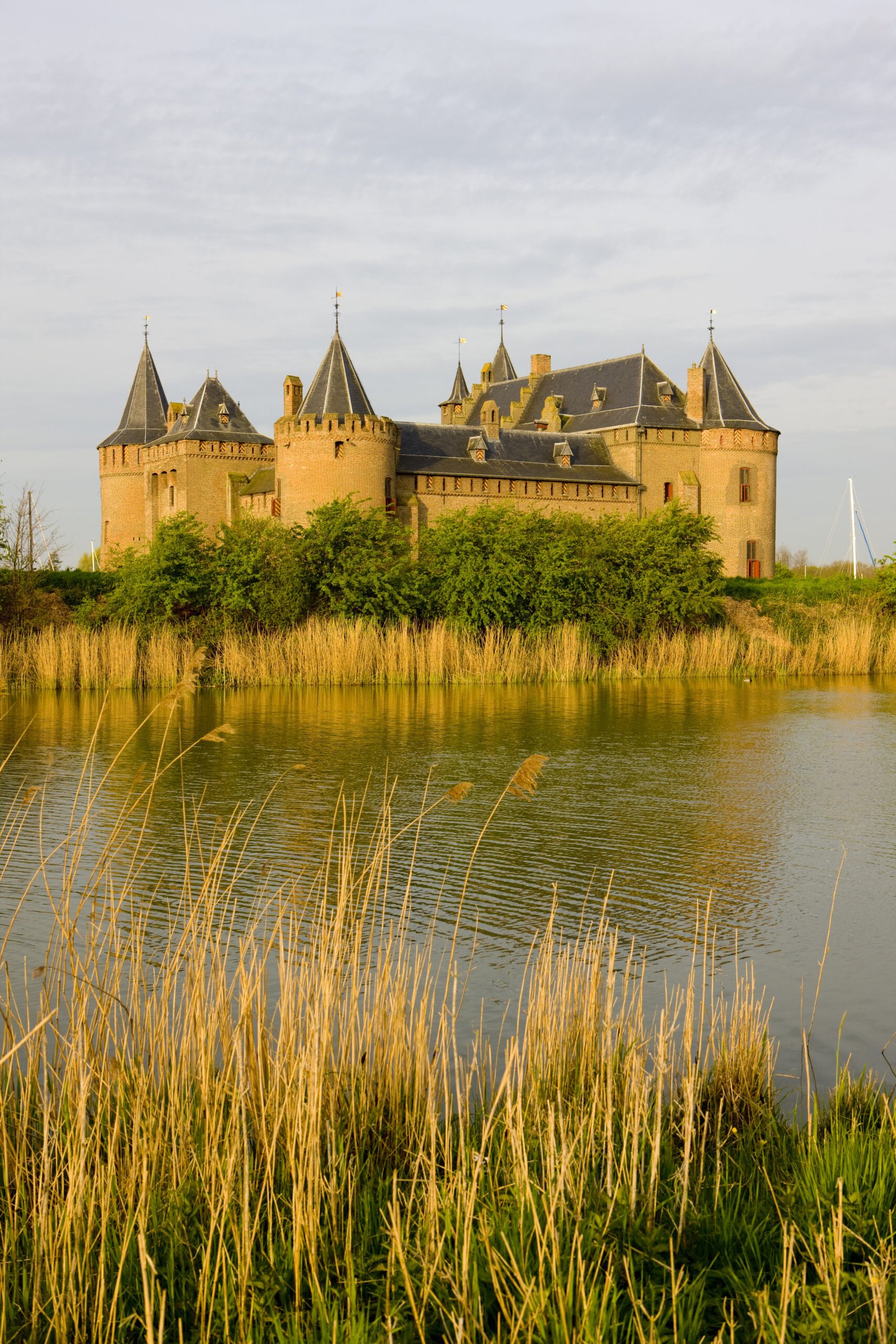
| Muiderslot, Muiden | Noord-Holland | Floris V, by association | Kidnapped and killed by his own nobles, 1296 | Strong on the murder. The ghost dates to a 1613 play and a 1626 letter |
| Amstel 216, Amsterdam | Noord-Holland | Coenraad van Beuningen’s reputation | Lost a fortune on VOC shares, then covered his house in symbols | Strong on the man. The blood is a rumor |
| Slot Waardenburg | Gelderland | Doctor Faust | A pact with the devil: seven years of knowledge for his soul | Medium. Printed in an 1842 almanac; the real Faust is well attested |
| The Flying Dutchman | The open sea | Captain Van der Decken | Swore to round the Cape of Good Hope in a storm, whatever it cost | Medium. First in print in 1790, shaped by English and German writers |
| Montelbaanstoren, Amsterdam | Noord-Holland | A doomed family, every 2 June | Killed while fleeing to the tower | Tower is solid (1516). The family has no name or year |
| Spooksteeg, Amsterdam | Noord-Holland | Helena | Pushed her sister Dina to her death over a sailor | Thin. Tour-guide territory, no primary source found |
| Singraven, Denekamp | Overijssel | The walled-in nun | Bricked into a wall after a sham trial, around 1500 | Thin. Retellings only |
| Kasteel Rechteren | Overijssel | The rabid hunter | Locked in a room after a dog bite | Thin. One retelling found |
| Grubbenvorst ruins | Limburg | A dancer in a white shroud | Cursed by a dying suitor | Thin. One retelling found |
Muiderslot, Muiden
Floris V, Count of Holland, had the castle built around 1280. In 1296 a group of nobles seized him on a hunting trip, among them Gijsbrecht van Amstel, Herman van Woerden and Gerard van Velzen. The count did not survive. Accounts differ on the details: Wikipedia has Van Velzen killing him in a panic after the abduction, while a Dutch literary history site says Van Velzen fled with the count when Floris’s supporters attacked the castle and killed him on the run. Van Velzen was caught, tortured and executed in Leiden. The popular motive, that Floris had raped Van Velzen’s wife, has no historical basis.
The ghost came through literature. P.C. Hooft, who held the castle as drost from 1609 to 1647 and hosted the writers of the Muiderkring there, wrote the tragedy Geeraerdt van Velsen in 1613. In one scene the ghost of Van Velzen’s dead brother confronts the imprisoned count. In 1626 Constantijn Huygens slept in the room where Floris had supposedly been held and wrote to Tesselschade Visscher about it under the title “Tspoock te Muyden”, the ghost of Muiden. A haunting that began with a poet’s overnight stay is hard to beat for provenance.
Amstel 216, Amsterdam
The canal house known as the House with the Bloodstains belonged to Coenraad van Beuningen, six times mayor of Amsterdam and one of the Dutch Republic’s most experienced diplomats. After leaving office he married his neighbor Jacoba Bartolotti in 1686 and moved into Amstel 216, according to the Oude Kerk archive. In 1688 he lost about half a million guilders speculating in Dutch East India Company, known as the VOC (Vereenigde Oostindische Compagnie) shares. His mind gave way, the city of Amsterdam became his legal guardian, and he died on 26 October 1693 owning a cape, two dressing gowns and little else.
The haunting rests on what he painted on the facade: Kabbalistic signs. Local legend says the paint was his own blood. Atlas Obscura treats the blood as rumor and notes that the cause of his illness is unclear, though it floats bipolar disorder. The house is a private residence now, and the Amsterdam Dungeon stages an October séance around him. Of the nine entries, Van Beuningen is the best-documented person and the thinnest ghost. The sadder reading, a statesman ruined by the same Company shares that financed the Golden Age, needs no spirit at all.
Slot Waardenburg, Gelderland
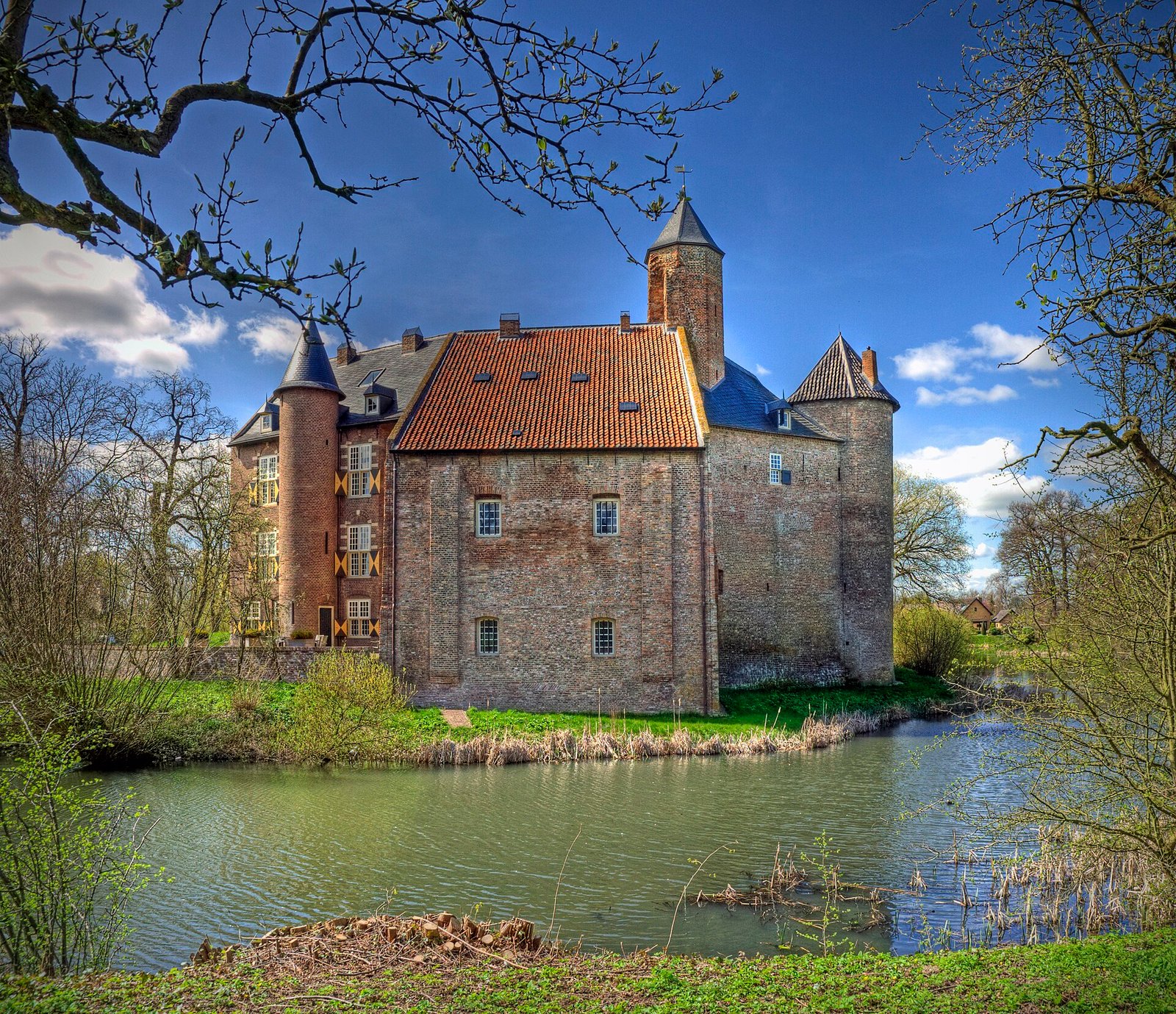
Kasteel Waardenburg/Waardenburg Castle
Waardenburg’s firmest date is 2 August 1265, when Count Otto II of Guelders pledged the manor to the knight Rudolph de Cock. The ghost story is a local branch of the Faust legend. A tale in the Geldersche Volksalmanak of 1842 puts Doctor Faust in the castle after his deal with the devil: seven years of all the world’s knowledge in exchange for his soul. One ending has the devil drag him from the tower by his hair, leaving bloodstains that guides still mention. Another has him thrown off.
The historical Johann Faust died around 1540, and the first printed Faust book appeared in 1587, so the castle borrowed a famous story rather than the other way around. The borrowing keeps paying off. In 1941 Marten Toonder, inspired by the Faust tale, put his wizard Hocus Pas in a dragon castle that later became Bommelstein.
The Flying Dutchman
The best-known Dutch ghost may be Dutch mainly in its casting. The first known print reference is in John MacDonald’s travel book of 1790, where storm-struck sailors say they saw the ship. The first full narrative ran in Blackwood’s Edinburgh Magazine in May 1821, with a captain named Van der Decken who swears he will round the Cape of Good Hope even if it takes until judgment day. Heinrich Heine retold it in 1833, and Wagner’s opera followed.
Historians treat the story as legend with no historical basis. One candidate for a real model is the VOC skipper Bernard Fokke, said to have crossed so fast that sailors suspected supernatural help (Utah Opera). The Dutch contribution is the Company, the Cape route and the stubbornness.
Montelbaanstoren, Amsterdam
The tower on the Oudeschans went up in 1516 as part of the city’s defenses. Hendrick de Keyser designed the decorative top in 1606, which brought it to 48 meters. Its name comes from a plan that never happened: the third Duke of Alba proposed building a castle around it, the Monte Albano, and the name stuck in mangled form.
The ghosts are a family said to have been killed while running for the tower’s safety during a Spanish attack in the Eighty Years’ War. Every year on 2 June they reappear and relive the climb, vanishing at the top of the stairs. One retelling dresses them in twentieth-century clothes, which suggests the details are still being negotiated. A ghost with a calendar date and no surname is a good sign of an oral legend rather than a documented event.
Spooksteeg, Amsterdam
Ghost Alley connects the Nieuwmarkt area to the Oudezijds Achterburgwal. In the usual version, Helena, a tanner’s daughter, was jealous when a sailor preferred her sister Dina. Helena killed Dina by throwing her into the tannery cellar, made it look like an accident, and married the sailor. She confessed on her deathbed in 1753. A century later, the story goes, screams began to be heard in the alley. IamExpat’s version has the sisters fighting while the sailor is at sea, and a DutchReview piece adds a second legend tying the alley to a Franciscan monastery.
The versions disagree on details, and one local-history writer notes that a direct ghost legend is not widely documented in historical records. No primary source for Helena turned up in the material consulted. The alley’s name practically demands a story, and Amsterdam’s ghost-walk industry has supplied one. That does not make it worthless folklore. It makes it the most repeated and least checkable entry here.
Singraven, Overijssel

The Singraven estate near Denekamp is first mentioned in 1381, and its watermill dates to 1448. According to a regional folklore route, it housed Franciscan nuns for about ten years around 1500. One of them was accused of unchaste contact with villagers and, after a show trial, walled into the convent. Her screams reportedly went on for days.
The retellings say she never left. She appears above the water at the mill, as a pale mist, or in a window, and the house picked up the nickname the Black House (IamExpat). The nun shows up in folklore retellings rather than in the heritage and tourism summaries consulted, so the haunting is better evidenced than the crime.
Rechteren and Grubbenvorst
Two castle legends, both found in a single IamExpat roundup and best treated as folklore.
At Kasteel Rechteren near Zwolle, a room is said to stay locked with the key in the door. A hunter bitten by a rabid dog lost his mind, was lured into the room and locked in, and could be heard roaring for days. Nobody opens it for fear of what comes out.
At the Grubbenvorst ruins on the Maas, a young nobleman in the late sixteenth century caught his beloved rowing across the river with another man. The rival killed him in the ruins. Dying, he cursed the girl, who was dead of fever three days later. Now a figure in a white shroud grabs men who walk past at night and makes them dance until they die of fright.
The shrouded dancer fits an older local type, the Witte Wieve, the white women of Twente who live at forest edges and on heathland in long white clothing. Grubbenvorst is in Limburg, a long way from Twente, which says something about how widely the motif travelled.
The timeline
| Year | What happened | Status |
|---|---|---|
| 1265 | Waardenburg pledged to Rudolph de Cock | Documented |
| c. 1280 | Muiderslot built for Floris V | Documented |
| 1296 | Floris V seized and killed | Documented |
| c. 1500 | Nun walled into the wall at Singraven | Legend |
| 1516 | Montelbaanstoren built | Documented |
| 1613 | Hooft’s play puts a ghost on stage at Muiden | Documented, as literature |
| 1626 | Huygens sleeps in Floris’s room and writes about the Muiden ghost | Documented, as literature |
| 1688 | Van Beuningen loses his fortune; Amsterdam becomes his guardian | Documented |
| 1693 | Van Beuningen dies, 26 October | Documented |
| 1753 | Helena’s deathbed confession | Legend |
| 1790 | Flying Dutchman first appears in print | Documented, as a rumor |
| 1821 | Blackwood’s publishes the full Van der Decken story | Documented, as literature |
| 1842 | Faust at Waardenburg printed in the Gelderland almanac | Documented, as a tale |
Ranked by evidence
Muiderslot comes first: the killing is history, and the ghost can be dated to a play and a letter. Amstel 216 is second, with the best-documented human being on the list and a haunting built on a rumor about paint. Waardenburg and the Flying Dutchman follow, both with traceable printed origins and both borrowing heavily from other traditions. The Montelbaanstoren has a real tower and an anonymous family. Spooksteeg, Singraven, Rechteren and Grubbenvorst depend on retellings, which makes them harder to check and no less entertaining.
For anyone going to look: Amstel 216 is a private home, so the view from the street is the whole visit.
Sources
- Floris V, Count of Holland, Wikipedia
- Gerard van Velsen, Wikipedia
- “Tspook te Muiden,” Constantijn Huygens, 1626, literatuurgeschiedenis.org
- Netherlands: The stories behind the castles, IamExpat
- Coenraad van Beuningen, Wikipedia
- Beuningen, Coenraet Van, Oude Kerk Open Archive
- The House with the Blood Stains, Atlas Obscura
- The house with the bloodstains, The Amsterdam Dungeon
- Waardenburg, Exciting History
- Dokter Faust van Waardenburg, Wikipedia
- Hans Crombag & Bert Theunissen, VPRO
- Flying Dutchman, Wikipedia
- The Flying Dutchman, legends of Aarne-Thompson-Uther type 777*, ed. D. L. Ashliman, University of Pittsburgh
- Ghost ships: The Flying Dutchman and his curse, YACHT
- The Legend of the Dutchman, Dr. Carol Anderson, Utah Opera
- Montelbaanstoren, Wikipedia
- Haunted places in Amsterdam for Halloween lovers, I amsterdam
- Amsterdam ghost stories, Icy Sedgwick
- 5 of the most haunted places in Amsterdam, Alexandra Huetter, DutchReview
- Dutch ghost stories: Spirits, monsters and witches, Alexandra van Kampen, IamExpat
- The Enigmatic Spooksteeg in Amsterdam, World City Trail
- Manor ‘Singraven’, Ootmarsum-Dinkelland tourist information
- Nederland – Denekamp, Huis Singraven, ipernity
- Twentse Spook of Sagenlandroute, RouteXpert Arno van Lochem
- Haunted places in the Netherlands: Castles, convents and ships, Alexandra van Kampen, IamExpat