
Here’s the thing about Koningsdag. It is genuinely one of the most fun days you can have in a European city: the canals full of boats, the entire population dressed in orange, the flea markets colonising every bridge, the general sense that the Netherlands has simply decided rules don’t apply today. It’s chaotic and loud and smells faintly of beer and stroopwafel, and if you’re visiting for the first time, you should absolutely be there for it.
But then April 27th ends. And if you’re still in Amsterdam, which you should be, you’re left with a city that’s shaking off confetti and wondering what’s next.
The answer is: quite a lot. May and June in Amsterdam are genuinely the best weeks of the year. The tulip crowds have started to thin. The summer hordes haven’t arrived yet. The weather is somewhere between “optimistically pleasant” and “actually sunny.” And the city puts on a run of events that most visitors, focused on the big orange party, don’t know exist.
Here’s what to do with yourself.
May 4 and 5: The Most Emotional Back-to-Back Days in the Dutch Calendar
Four days after Koningsdag, Amsterdam does something that feels like whiplash if you’re not expecting it.

May 4 is Remembrance Day (Dodenherdenking). At 8pm, the entire country stops. Not metaphorically — actually stops. Trains halt. Trams halt. People pull over. The two-minute silence on Dam Square is the main ceremony, and it’s worth being there for, not as a spectator exactly, but as a participant. This is the Netherlands remembering its dead from World War II and every conflict since. The atmosphere is not performative grief. It’s quiet in a way that cities almost never are. (More info: 4en5meiamsterdam.nl)
May 5 is Liberation Day (Bevrijdingsdag) — the celebration of the Nazi occupation ending in 1945. The tone flips completely overnight. Free festivals run across fourteen cities, and Amsterdam’s version spreads through Westerpark, Museumplein, and along the Amstel. Seven stages in Westerpark alone, ranging from Dutch pop acts to hip-hop to classical. The evening ends with the Concert on the Amstel, a free outdoor concert in front of the Royal Theatre Carré, right on the river. It’s genuinely moving. (Details: amsterdamspotted.com)
2026 note: Liberation Day falls on a Tuesday and is only an official public holiday every five years. It’s not a holiday this year, which means it’ll be slightly less packed than usual, which means you’ll actually be able to move. (Source: Amsterdam Spotted)
May 9–10: National Mill Day
This one is easy to overlook and shouldn’t be. On the second weekend of May every year, windmills across the Netherlands open their doors to the public. The ones in and around Amsterdam — including De Gooyer in the east and De 1100 Roe near the Amsterdamse Bos — normally sit pretty and inaccessible. This weekend you can actually go inside. It’s a slightly absurd pleasure, climbing a working windmill that’s been standing there since the 17th century while Amsterdam churns away around you. Recommended particularly if you’ve been doing the canal-and-museum circuit and want something different. (Source: Amsterdamian)
May 13–17: Rolling Kitchens (Rollende Keukens)
This is one of the best things in the city’s calendar and it doesn’t get nearly enough attention from tourists. Over 100 food trucks and mobile kitchens take over the Westergasfabriek complex in Westerpark for five days. Long communal tables, live music, Dutch and international food side by side, and entry is free. The 2026 edition is the 18th. (Rollende Keukens details: iamsterdam.com)
Westerpark is already one of the city’s better parks — former gasworks, open lawns, decent café culture — and in mid-May with a hundred kitchens operating, it’s excellent. Go for lunch, not dinner, unless you enjoy queuing.
May 10 (approx): Last Chance at Keukenhof
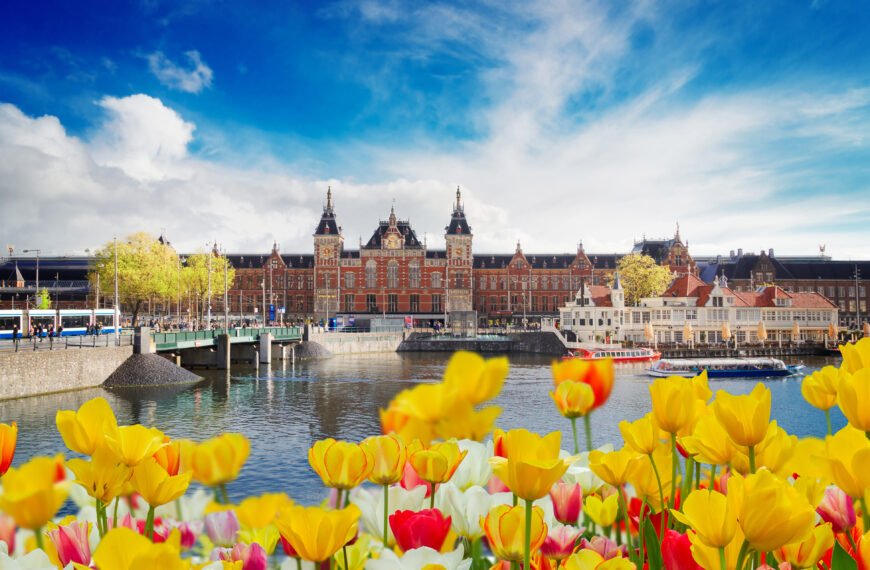
If you haven’t been to Keukenhof yet and you’re still in the Netherlands in early May — go. The 2026 season closes 10 May. It’s about 35km from Amsterdam, near Lisse, and it’s 32 hectares of seven million tulips, hyacinths, daffodils, and other things your phone camera will not do justice to. (keukenhof.nl)
A few things worth knowing: get there when it opens, not at noon. Book online. It’s wildly popular (a million visitors in a season), but the mornings are manageable in a way the afternoons aren’t. Bus service runs direct from Schiphol. (Source: Amsterdamian spring guide)
If Keukenhof feels too packaged for you, the actual tulip fields in the Bollenstreek region — the flat farmland between Haarlem, Lisse, and Leiden — are something else. These are working farms, so you mostly see them from roadsides and bike paths. The last week of April is the peak; by mid-May most fields have been cut. There are smaller-scale guided bike tours through the region that stay well away from the coach-tour circuit. (Visiting the Dutch Countryside tours) Seven people at a time, no tour buses, quite good.
May 19–24: Amsterdam Art Week
If you’re in town in the third week of May, Amsterdam Art Week turns the city into something resembling a large, navigable art fair. Contemporary art venues, galleries, and pop-ups across the city run programming simultaneously. Less intimidating than a single fair, better for wandering. (amsterdamart.com)
The Museums — But Actually
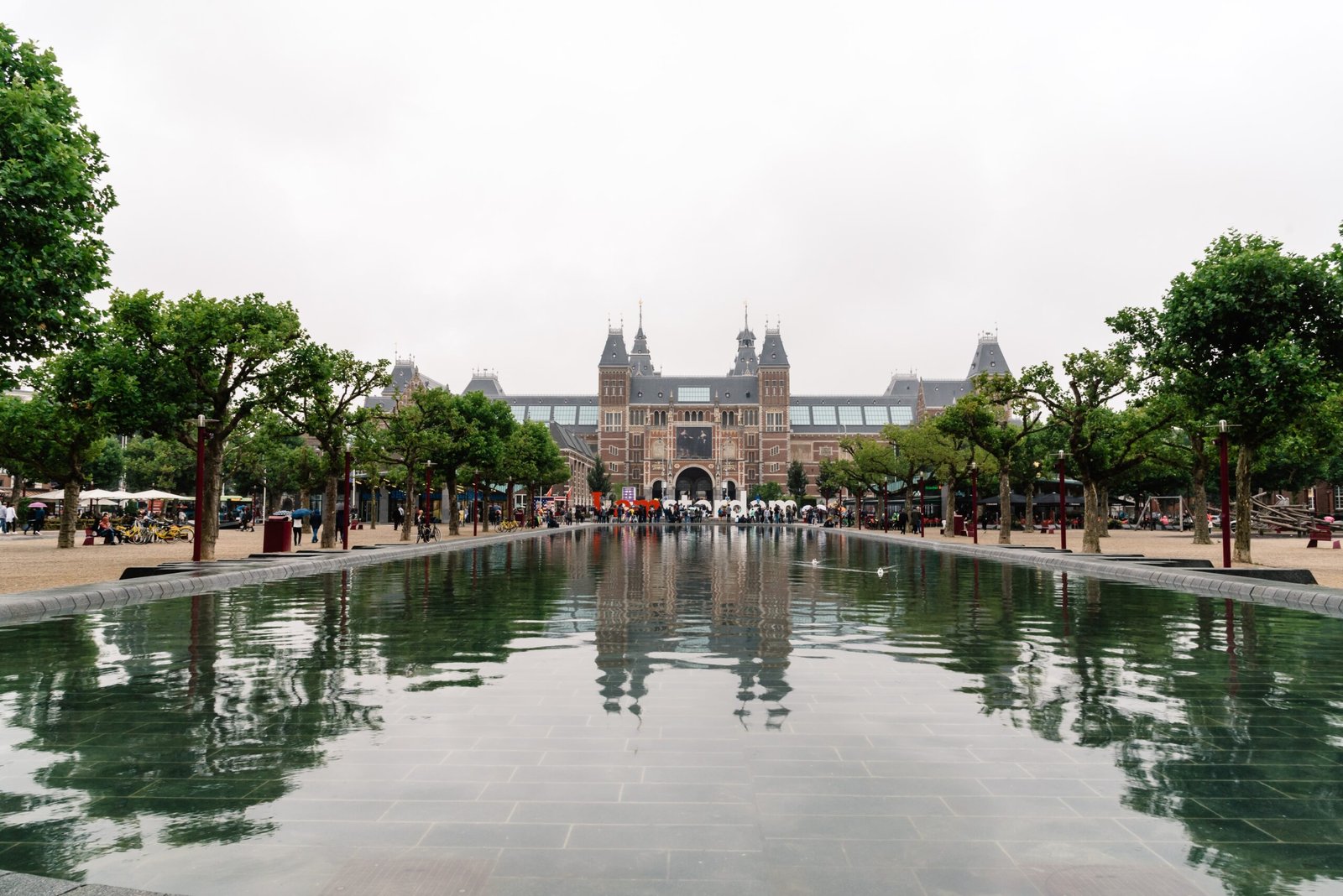
Look, you know the Rijksmuseum exists. You know the Van Gogh Museum exists. Here’s what’s worth saying about both right now, post-Koningsdag, in case you did not go during the dark times of winter:
Rijksmuseum has a temporary exhibition running until 25 May 2026 called Metamorphoses, bringing together over 80 works by Titian, Caravaggio, and Rodin alongside contemporary video art. It was inspired by Ovid’s poem. It’s good. Book a timed slot, arrive early (doors at 9am), and don’t try to see the whole museum in one sitting. That’s not a museum — that’s an endurance event. (rijksmuseum.nl)
Van Gogh Museum is the most visited museum in the Netherlands. The trick: book 3–4 weeks in advance and take the first slot of the day. The difference between the first hour and the 11am rush is significant enough that it’s worth planning around. (vangoghmuseum.nl)
STRAAT is a completely different kind of place — an 8,000 square metre warehouse at the NDSM Wharf on the north bank, containing 180 works of street art and graffiti, all made on-site. It’s on of our favorites. It’s the largest indoor street art museum in the world and it’s genuinely worth the ferry ride across the IJ. The ferry from behind Centraal Station is free and takes 12 minutes. (straatmuseum.com)
Anne Frank House books out months in advance. If you haven’t already sorted a ticket, check right now. Not later. Now. (annefrank.org)
June: The City Starts Showing Off
June is when Amsterdam stops hedging. The weather commits. The terraces fill. Things happen outdoors that couldn’t happen in April.
Holland Festival runs 3–28 June across multiple venues — theatre, music, performance art, all tilted toward the experimental. It’s been going since 1948. Not everything will be for you, but something probably will. (hollandfestival.nl)
Amsterdam Open Air (6–7 June) is an electronic music festival in Gaasperpark in Amsterdam-Zuidoost. Underground electronic, house, techno — proper festival setup in a park most tourists don’t know exists. (amsterdamopenair.nl)
Bacchus Wine Festival runs across three weekends in June (5–7, 12–14, 19–21) in Rembrandtpark. Outdoor, French food, live music, wines from somewhere that isn’t a Dutch supermarket. Nice. (Source: I amsterdam)
Red Light Jazz (5–7 June) does what it says — jazz venues across the city, centred on the De Wallen neighbourhood. It’s one of those festival weekends where the neighbourhood actually changes character for 72 hours. (redlightjazz.com)
Open Garden Days: The Most Specifically Amsterdam Thing You Can Do
This is the one. Every year on the third weekend of June (19–21 June in 2026), around thirty private canal house gardens open to the public for three days. The only way to reach most of them is through the house itself, which means you’re also walking through 17th-century interiors that are otherwise never accessible. (iamsterdam.com – Open Garden Days)
Here’s the thing about those canal houses: they look narrow and vertical from the street. Behind them, hidden from every angle, are gardens that stretch into the middle of each city block. Old trees, formal parterres, sundials, 100-year-old trees that are legally protected monuments. You cannot see any of this from the street. The city looks one way from the canals. It looks completely different from inside those walls.
One visitor who went in 2025 put it well: walking through those gardens felt “like stepping into a secret world, where the noise of the city faded away.” It gets busy — you’ll be shuffling rather than strolling by midday — but go early and it’s extraordinary. (Source: Tassie Devil Abroad)
Tickets are €25 (presale via Museum Van Loon until June 18). No prams, no wheeled suitcases, no dogs. The gardens are genuinely fragile. (museumvanloon.nl)
Vondelpark: Free, All Month
The Vondelpark Open Air Theatre runs from May through September with free performances — music, dance, theatre — in an outdoor stage in the middle of the park. You bring a blanket, you sit on the grass, sometimes it’s excellent and sometimes it’s a Dutch comedy show you can’t follow. Either way, it’s free and you’re in the best park in the city. (vondelpark.amsterdam)
A Few Practical Things
The weather. Average May temperature in Amsterdam is around 13°C. Average June is about 16°C. The Dutch will cheerfully tell you this is warm. They are wrong and also right. Bring layers. The wind is real — the Netherlands has a flat, maritime climate that funnels the North Sea directly at you through all your clothing. A sunny day at 13°C with wind feels like 8°C. Pack accordingly and then enjoy the sun genuinely when it arrives, which it does. (Source: Visiting the Dutch Countryside)
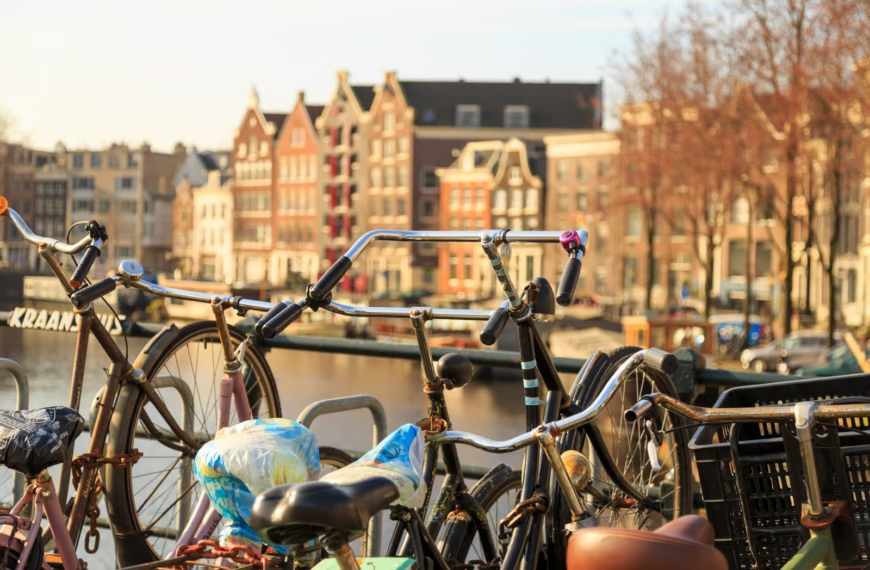
Bikes. Hire one. The entire city works better by bike, particularly for getting between neighbourhoods that the tram network doesn’t connect efficiently. MacBike rents them centrally. Cycle on the bike paths, not the road or the pavement. Amsterdam cyclists will not be gentle about this.
Museum card. If you’re doing three or more museums, the Museumkaart (€70 for a year, or a short-term version) gets you into most of the major ones free and lets you skip certain queues. Worth calculating before your first museum.
Getting around. Google Maps transit mode works well for Amsterdam public transport — it integrates live tram, metro, and bus data. Direct transit link for Amsterdam.
The Honest Version
Post-Koningsdag Amsterdam is a slightly quieter city that is also significantly more enjoyable to be in. The tourist numbers climb steadily toward summer, but May is still shoulder season. The museums are manageable. The parks are glorious. The city has a texture — neighbourhoods with actual residents doing actual things — that’s easier to feel when it’s not wall-to-wall orange.
Come for Koningsdag. Stay for the rest of it.
Sources and links: I amsterdam events calendar | Amsterdam Tips May guide | Amsterdamian spring guide | Amsterdam Spotted May 2026 | 020.amsterdam events calendar | Liberation Day details | Open Garden Days – I amsterdam | Keukenhof | Tulip Festival Amsterdam