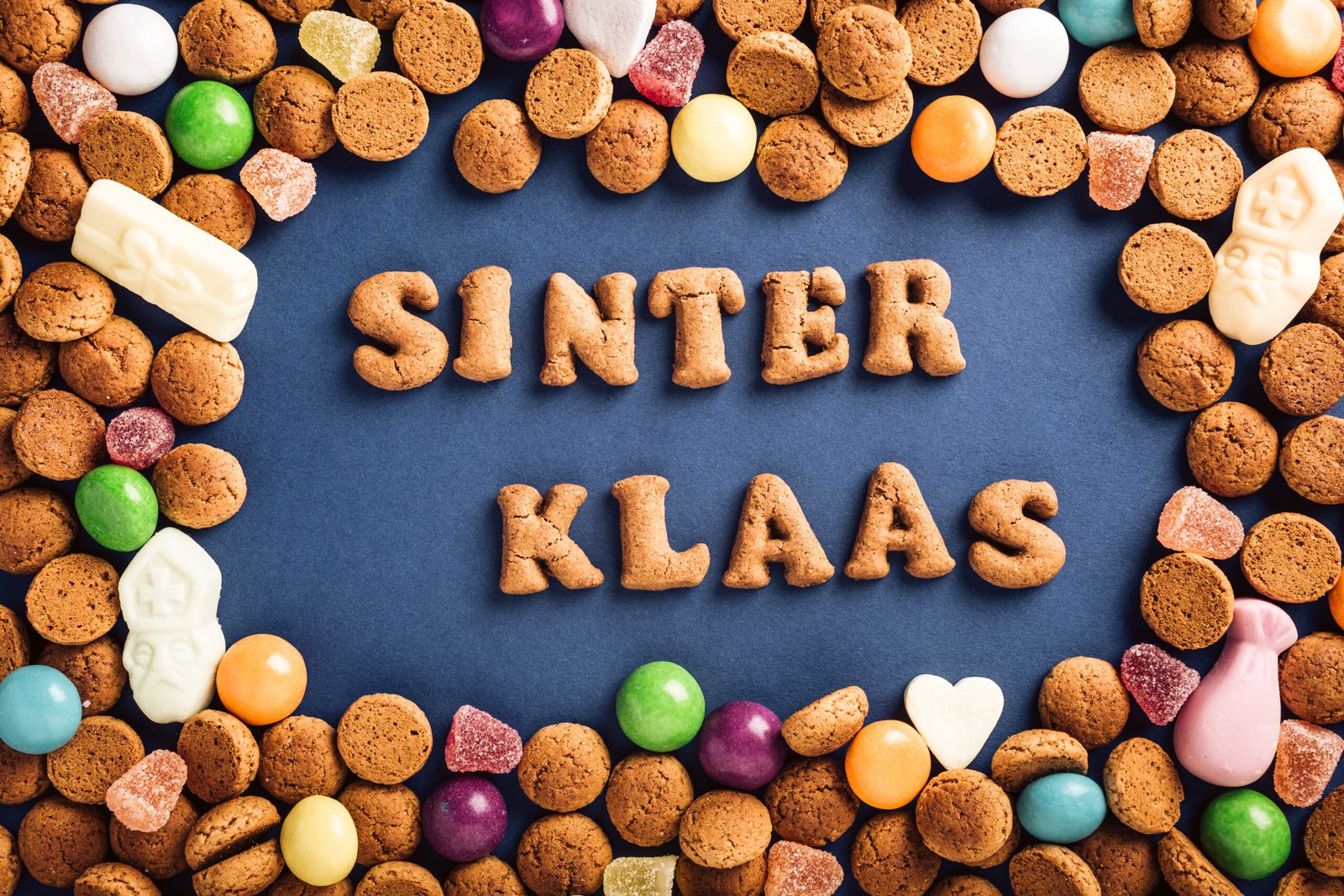
Every November, a fourth-century bishop from what is now Turkey arrives in the Netherlands by steamboat from Spain. The national broadcaster covers it live, a daily news programme tracks his progress for a week beforehand, and the country’s children treat him as a matter of public record. The logistics have never been fully explained. Nobody seems to mind.
This year adds a plot twist. Stefan de Walle, who has played the saint since 2011, is stepping down after fifteen years, and the broadcaster NTR has said the successor will appear in the first episode of the Sinterklaasjournaal on 9 November. It declined to comment on any name. Daan Schuurmans, the favourite of the rumour mill, denied it in plain terms. The names still being floated have included Kasper van Kooten and Ramsey Nasr. The saint himself is cast as an employee with a succession plan, which is more than most Dutch ministries can claim.
Who he is, when he comes, what he does
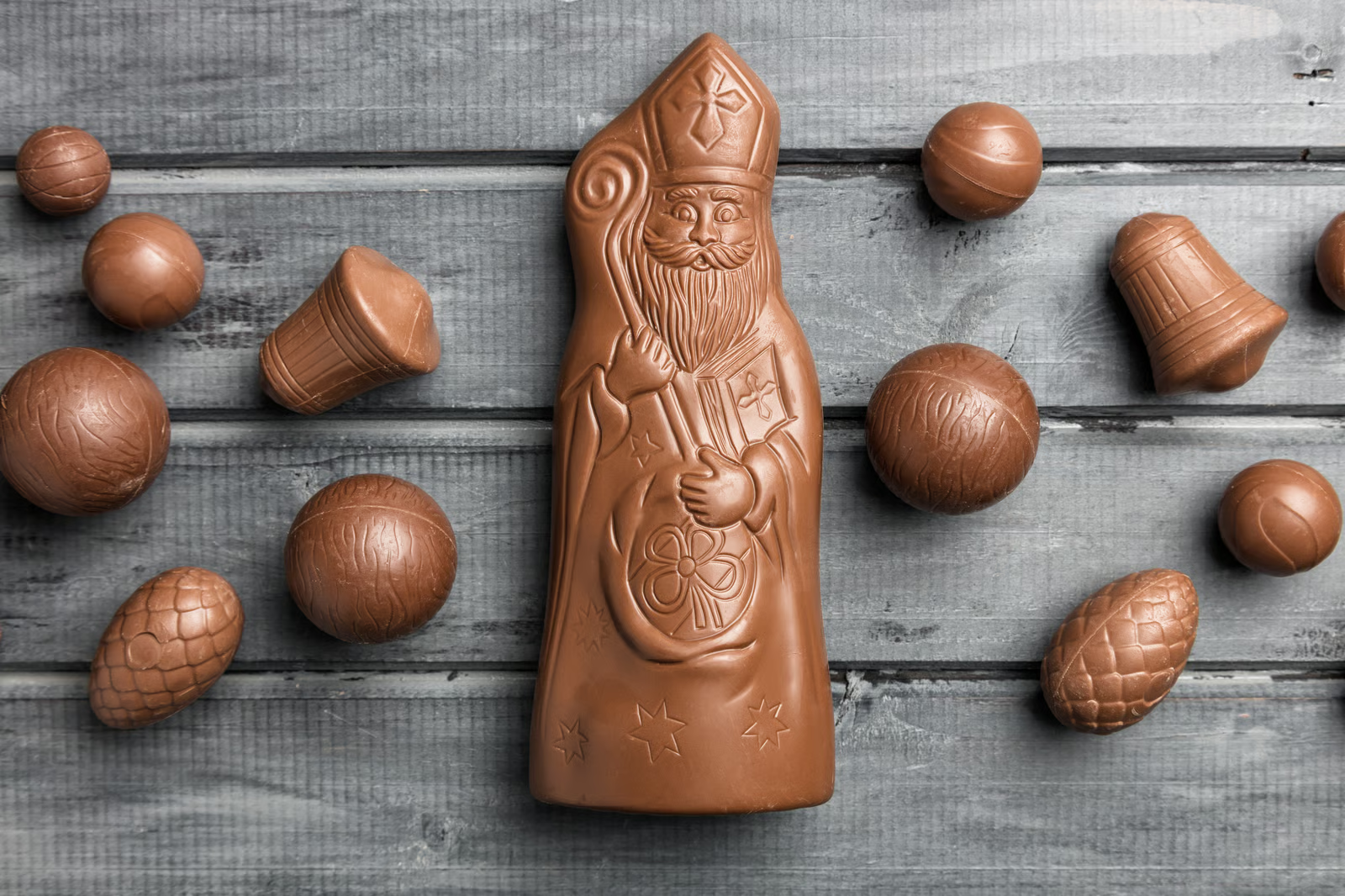
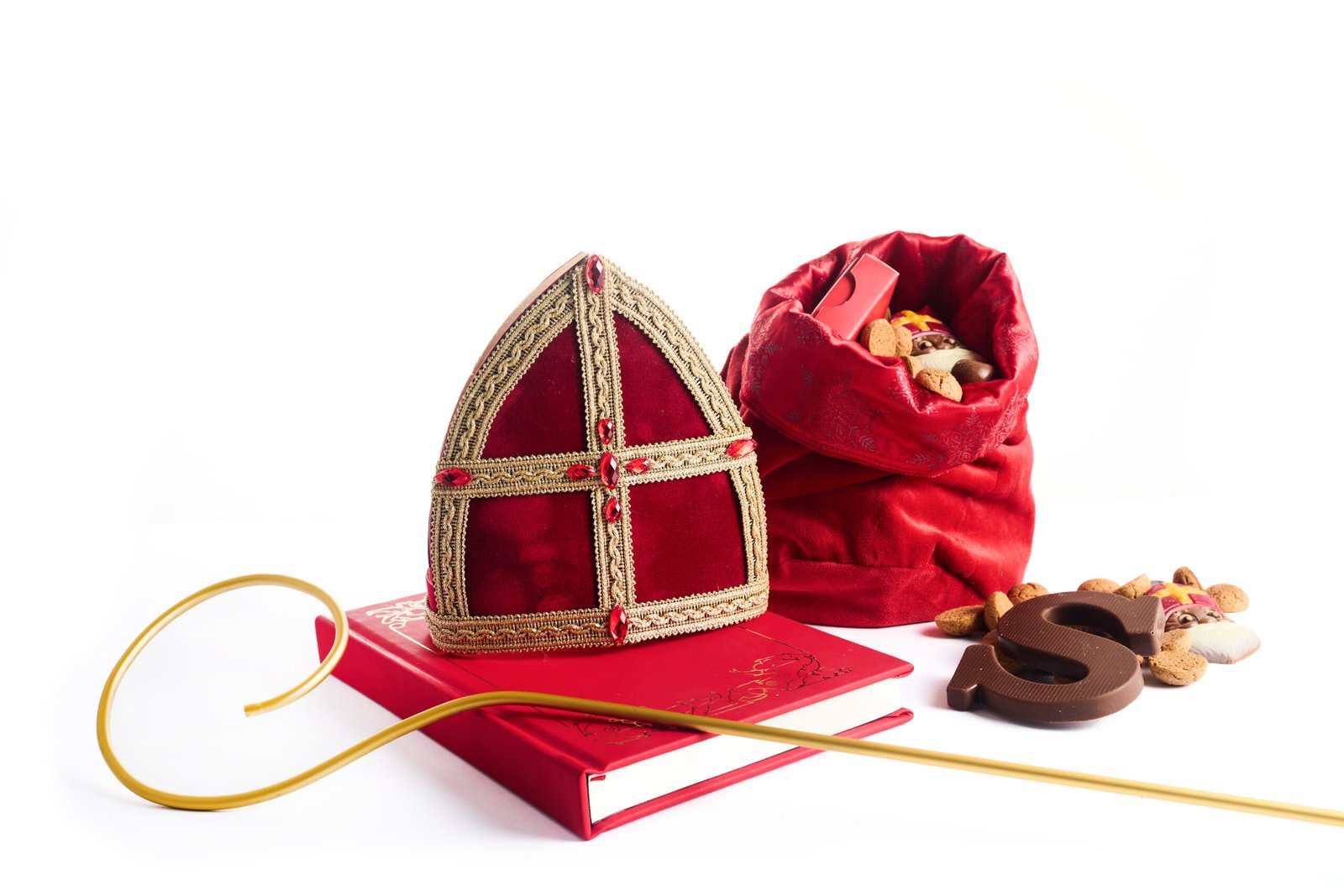
Sinterklaas is based on Nicholas, a bishop of Myra and the patron saint of children and of sailors. The Koninklijke Bibliotheek notes that the sailors’ connection explains why so many port cities have a Saint Nicholas church, and why he still arrives by sea. In the Dutch version he lives in Spain, rides a white horse and keeps a big book. The ritual follows a fixed sequence:
| Date (2026) | What happens |
|---|---|
| Monday 9 November, 18:00 | The Sinterklaasjournaal starts on NPO 3, ten minutes a night, with a new Sint to be revealed |
| Saturday 14 November, 12:00 | National arrival in Grave, live on NPO 3. It is the first time since 2000 that a Brabant municipality hosts it |
| Mid-November to early December | Children set a shoe by the fireplace, window or radiator and find sweets or a small gift. Local arrivals happen in towns on later weekends |
| Saturday 5 December | Pakjesavond (parcel evening): the main gift night |
| 6 December | The saint’s name day. He and his crew head back to Spain |
The adult half of the festival is a different sport. Families draw lots weeks ahead, and each person must produce a “surprise”, an elaborately disguised present with a poem attached. The poem is meant to tease the recipient about a flaw. DutchNews estimated around 60 percent of households take part, which makes it the closest thing the country has to a secular high holiday with a copyright dispute over the sweets.
The Kingdom, island by island
The question of “Dutch territories” has a precise answer. Since 10 October 2010 the Kingdom of the Netherlands has four countries: the Netherlands, Aruba, Curaçao and Sint Maarten. Bonaire, Sint Eustatius and Saba are special municipalities of the Netherlands, collectively Caribisch Nederland. Suriname is independent. Sinterklaas has travelled to most of them, and the arrival has been argued over in several.
| Place | Status | Sinterklaas |
|---|---|---|
| Aruba | Country | Arrives by boat at Oranjestad harbour in mid-November. Blackface was banned in 2020, then helpers in full blackface returned at the 2025 official entry, and the dispute reached parliament |
| Curaçao | Country | Used to arrive in Willemstad harbour. In June 2020 the organising foundation ended the arrival after years of criticism. No revival turned up in later coverage |
| Sint Maarten | Country | No source found for a current celebration |
| Bonaire | Special municipality | A tourism site describes songs in Dutch and Papiamentu, tropical-outfit helpers and Sinterklaas arriving by plane at Flamingo airport |
| Sint Eustatius | Special municipality | An anthropologist’s 2025 article treats the December parade as a place where the blackface legacy is contested. No arrival report was found |
| Saba | Special municipality | No source found |
| Suriname | Independent | An activist in Curaçao points to Suriname as having replaced the feast with a children’s day (Kinderdag) on 5 December since 2011 |
The Curaçao story has a detail worth keeping. Solange Trinidad of the organising foundation told NOS that coloured helpers were no solution there, because none of her Curaçaoan helpers wanted a colour, and they had to draw lots the previous year to assign anyone to a different shade. The island’s feast, in other words, was contested in both directions at once.
Where he came from
Nicholas the bishop was a figure of European folk devotion for centuries. The modern Dutch Sinterklaas has a more precise birthday. In 1850, Amsterdam schoolteacher Jan Schenkman published Sint Nikolaas en zijn knecht, a picture book in which the saint arrives by steamboat from Spain with a servant. The KB says the book is the first known picture book of the modern festival. The steamboat song children still sing, “Zie ginds komt de stoomboot”, is from it. A steamboat in 1850 was the height of modern technology, and the picture book is the first evidence that the saint kept pace with it.
The servant is where the trouble starts. The same KB page records that Piet first appears there as a black man in an oriental-looking costume. A 2015 article in De Boekenwereld notes that in the earliest edition the servant is not yet dressed as a Moorish page, but wears a coloured vest and white trousers, and that opponents of the figure trace his origin to slavery. The costume that people later recognised, with its 16th-century noble dress, came later. The exact roots remain a matter of scholarly argument, which is partly why the public argument never closed.
Zwarte Piet, and the argument
Zwarte Piet (Black Pete) is the saint’s helper, traditionally played by white adults in black makeup, curly wigs, red lipstick and gold earrings. Critics call him a racist caricature with roots in slavery and colonialism. Defenders call him an innocent children’s tradition. Both descriptions are in the record, and both sides have named individuals behind them.
The modern fight dates from 2011. At the national arrival in Dordrecht that year, artists Quinsy Gario and Jerry Afriyie wore T-shirts reading “Zwarte Piet is Racisme” and were arrested. The National Ombudsman ruled the arrests unlawful in 2014. Gario, born in Curaçao, told a journalist that in the Netherlands people had called his mother Zwarte Piet. In July 2014 the Amsterdam District Court ruled the figure a negative stereotype, and in November the Council of State held that the mayor did not have to decide that when issuing a parade permit.
Then Prime Minister Mark Rutte told the public in 2014 that Black Pete was black and he could not change it. In June 2020, after the George Floyd protests, he told parliament he had changed his mind and expected few Black Petes in a few years. The pattern is visible in the opinion data. EenVandaag’s annual poll found support for the traditional Piet fell from 89 percent in 2013 to 55 percent in 2020, with the slide continuing into the 2021 survey. An Ipsos poll cited in 2025 reporting put it at 38 percent, down from 65 percent in 2016.
The substitutes arrived in stages. In Amsterdam in 2014 the Piets lost earrings, curly hair and exaggerated lips, and Sooty Piets (roetveegpieten, white-faced helpers with soot smudges) followed. The Sinterklaasjournaal phased out the blackface Piet between 2014 and 2019. Multicoloured “rainbow” Piets lasted about a season, and RTL’s chimney Piets used soot streaks. The NTR later explained that all Pieten are sooty by virtue of chimneys, including the uniformly black ones, which produced its own confusion. By 2021, most towns had moved to soot.
It did not go quietly. At the 2018 national arrival in Zaanstad, thousands of onlookers watched while separate zones kept protesters and counter-protesters apart. Elsewhere violence broke out, including football-supporter groups confronting small demonstrations in Eindhoven and Leeuwarden. In Hilversum, 15 volunteer Piets quit rather than change makeup, and 60 sooty ones remained. Kick Out Zwarte Piet, which Afriyie founded, did not organise any protests in 2025, and called the shift a largely won fight.
The Aruba case is the reminder that victory by region does not settle things. The island moved to coloured and sooty Piets for several years, and then its organising foundation reintroduced full blackface in 2025. The reporting describes insults aimed at critics and a public prosecutor’s flyer asking residents to stop racist behaviour. MPs Otami Thomasia and Ruthlyn Lindor asked the government to intervene, with Thomasia suggesting helpers without any racial markers as a compromise.
The strategic lesson is almost administrative. The soot compromise worked in most of the country because it kept the parade, the costume, the songs and the volunteers, and changed one visible feature. It did not satisfy everyone. Critics say it keeps the figure. Defenders say it breaks the tradition. A solution that both sides call insufficient is, in public policy, sometimes called a compromise.
The helpers
The Pieten of the television version are specialists. There is a Hoofdpiet (head Piet) who manages the others, a Boekpiet who keeps the saint’s book, and a Wegwijspiet (navigation Piet) who guides the steamboat. The character has also changed role. According to Expatica, he stopped speaking with an accent, stopped playing the fool, and lost the job of punisher. The Pieten of the Schenkman era were closer to bogeymen. Parents used the saint’s coming to scare children into obedience.
The Hoofdpiet has a hazardous career. Last year’s storyline had Niels van der Laan’s Hoofdpiet suggest that friends or relatives might have to stand in for Sinterklaas during a national emergency. Some parents objected on social media that it spoiled the tradition, and Merel Westrik, the Journaal’s presenter, said he received several death threats. It is an ordinary fact of Dutch life that an actor can be threatened over a children’s programme for contingency planning. The same programme won the 2025 Machiavelli Prize for public communication, and the jury praised it for working at several levels at once: simple enough for a child, sharp enough for the child’s parents. During the pandemic its Pieten held press conferences that mimicked the government’s.
Why it matters to children
Because for a Dutch child it is the first yearly event with a script, a villain-free plot and a deadline. The arrival is on television, the daily news programme runs for about three weeks, and a shoe left by the radiator produces a small, verifiable result the next morning. Children learn to wait, to sing in public, and to cope with the disappearance of a present when a Piet misplaces it in a storyline. Then they spend a few years working out how the logistics operate, and many then become the adults who run them. The same families are doing the poems and the surprises for each other.
It matters for a second reason, and that is where the controversy lives. Gario’s argument was about children as much as adults: what it means to a Black child that the figure of the helper is also a figure of mockery. Rutte told parliament that small children had told him they felt discriminated against because Pete is black, and that this was the last thing wanted in a children’s holiday. In Aruba, legislators said Black children were being mocked as “Black Pete”. Afriyie said some young people now correct adults by saying “Piet”.
The other side argues from children too. The organiser of a 2018 pro-Zwarte-Piet demonstration said it was just a children’s party, and supporters say adults are politicising the happiest weeks of a child’s year. The most telling detail may be the slogan both camps share. Afriyie said Sinterklaas needs to be a feast for all children. The Tilburg organising committee’s chair, introducing sooty Piets gradually, said the saint was for all Tilburgers, including people who find Pete a caricature. The disagreement is real, but the stated goal is identical.
For a Dutch eight-year-old this November, the practical position is simpler. The saint arrives on Saturday. Someone in Grave will be wearing the beard, and the whole country will know who it is on Monday night. The shoe goes by the window.
Sources
- NOS (2026). Stefan de Walle geeft zijn staf door en neemt afscheid van 5 december-rol.
- ANP via nieuws.nl. NTR gaat niet in op speculaties over nieuwe Sint and Daan Schuurmans ontkent dat hij nieuwe Sinterklaas is.
- Ziggo / NPO. Sinterklaasjournaal 2026 and Intocht Sinterklaas 2026.
- Koninklijke Bibliotheek. St. Nicholas Day.
- DutchNews (2015). Ten things you need to know to celebrate Sinterklaas.
- Holland2Stay. Celebrating Sinterklaas; Go-Kids. Sinterklaas intochten in de regio Haarlem.
- Rijksoverheid. Waaruit bestaat het Koninkrijk der Nederlanden?
- St. Nicholas Center. Aruba; Curaçao; Who is (Zwarte) Piet?; Continuing controversy.
- The Peoples Tribune via SXM Talks (7 December 2025). After 15 years, Dutch anti-blackface group declares victory, but Aruba brings him back.
- NOS (2020). Geen intocht van Sinterklaas meer op Curaçao, maar wat dan?
- Bonaire.com. Sinterklaas on Bonaire; American Anthropological Association. Creolization at play: the Christmas parade in Sint Eustatius.
- Wikipedia. Saint Nicholas and his servant; Sinterklaas. Transparent Language. Sinterklaas I. De Boekenwereld (2015). Het beeldbepalende sinterklaasboek van Jan Schenkman.
- DutchNews (2014). Zwarte Piet protesters wrongly arrested; NL Times (2014). Amsterdam wins Zwarte Piet court judgment; The New European. Good riddance to Santa’s racist little helper.
- EenVandaag (2021). Rapportage Sinterklaas 2021.
- NOS (2017). Piet blijft bij meeste intochten helemaal zwart; Hart van Nederland. Toch zwarte pieten bij Sinterklaasintocht in Zaanstad; DutchNews (2019). The battle of the blackface and sooty Petes; DutchNews (2021). Soot Piets take over.
- Expatica. Who’s that with Santa? An introduction to Black Peter; Wikiwijs. Sinterklaas teaching resource.
- DutchNews (2026). Sinterklaas news show wins Machiavelli prize; Public Matters. Sinterklaasjournaal receives Machiavelli Prize 2025.