If you’re new to the Netherlands and hear a wailing siren sweep across the entire country at noon on the first Monday of the month, don’t run. Everyone around you will keep eating their lunch. It’s a test — it has been a test for decades — and understanding what it is (and what replaces it) tells you quite a lot about how seriously this country takes being prepared for disaster.
The first-Monday siren
Every first Monday of the month, at exactly 12:00 noon, sirens sound across the Netherlands for 1 minute and 26 seconds. This is followed by an oral and text message on your phone inside of the Netherlands, regardless of your carrier, national or international. The system is called the Waarschuwings- en AlarmeringsStelsel, or WAS. The first version was set up in 1939 during the Second World War to warn people about incoming air raids. Monthly tests originally started in 1952 during the Cold War, ended in 1989 when the Berlin Wall fell, and resumed in 1993 with a renewed network.
The network of 4,278 sirens was last replaced in 1998. They were last activated in an actual emergency to warn of rapid river flooding in Limburg in 2021, and before that, following the release of poisonous chemicals from the Chemelot industrial plant, also in Limburg, in 2019.
The tone is a continuous rising-and-falling wail — not the staggered “all clear” pulse used elsewhere in Europe. If you ever hear it outside of noon on a first Monday, go inside, close windows and doors, turn on the radio or TV, and check NL-Alert on your phone. That combination — shelter plus information — is exactly what Dutch emergency authorities have been drilling into people for years.
Why the sirens are being switched off in 2028
Justice and Security Minister David van Weel confirmed in a letter to parliament that the network of roughly 4,200 siren poles will be phased out from January 1, 2028.
The short answer is: the hardware is old, and a phone does the job better. “It is a fairly dumb piece of equipment. Someone presses a button in a building and it sets off a noise. Ideally we want to give people more detailed information,” the minister said.
The government had previously talked about stopping the sirens as early as 2025, but the contract was renewed for two more years. Now, due to a lack of funds, the phasing out has been confirmed. The sirens are heard by around 75 percent of people in the best-case scenario, while NL-Alert on mobile phones reaches 92 percent of the population.
A majority in parliament has insisted that if the sirens go, they must be replaced with some kind of redundant backup system — particularly for people without phones, and for scenarios where mobile networks fail during the crisis itself. Van Weel has acknowledged this, and the Justice Ministry and the Defence Ministry are already working on a “minimal civil-military warning chain” as a fallback, though what that looks like in practice is still unclear.
NL-Alert is tested twice a year — at noon on the first Monday of June and December. When a real emergency occurs, your phone buzzes with a loud alarm tone and a text message telling you specifically what the threat is and what to do. No Dutch SIM card required — any phone connected to a Dutch cell tower receives it. You can read more at crisis.nl.
Emergency numbers
These are the numbers to have saved in your phone:
- 112 — the number for all emergencies requiring police, fire, ambulance, or rescue services, with English-speaking operators available 24/7.
- 0900 8844 — for police situations that are not immediate emergencies. You’ll be connected to your local station. See politie.nl
- 0900 1515 — general medical advice around the clock.
- 0800 9009 — gas and electricity emergencies. See gasenstroomstoringen.nl
- 0900 0111 — coast guard. See kustwacht.nl
- 088 269 2222 — ANWB roadside breakdown service.
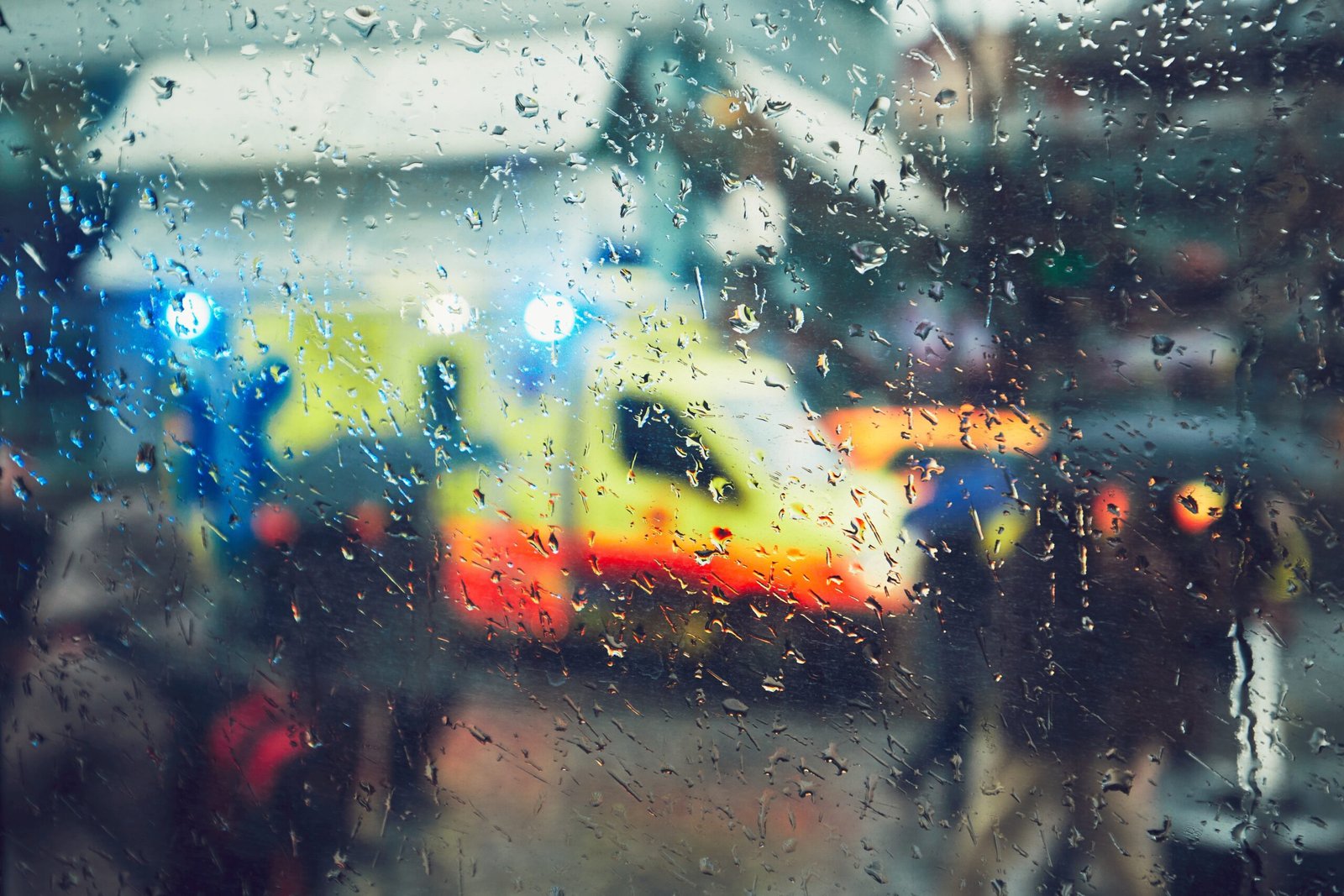
Ambulance rides in the Netherlands cost between €700 and €1,000 depending on distance and care, and are not covered by basic insurance in the way emergency department visits are. The national standard requires ambulances to respond within 15 minutes — in cities this is usually faster, but in 2023, 9.3% of urgent calls in rural areas took longer.
Flooding: the permanent emergency
About a third of the Netherlands sits below sea level. That’s not a quirk — it’s the defining fact of life here, and the Dutch have been engineering their way out of drowning for centuries.
The Delta Works is a series of construction projects built between 1954 and 1997 to protect a large area of land around the Rhine-Meuse-Scheldt delta from the sea, consisting of dams, sluices, locks, dykes, levees, and storm surge barriers in South Holland and Zeeland. The American Society of Civil Engineers named it one of the Seven Wonders of the Modern World.
The Flood Protection Programme — the largest operational project in the Delta Programme — has 110 dike upgrade projects planned for 2025–2036, covering 887 kilometres of dike and 261 engineering structures. The goal is for all primary flood defences to comply with modern flood risk standards by 2050.
About 26% of the Netherlands lies below sea level. If you notice a damaged dike, you should contact your local water board (waterschap) immediately. In the event of a dike breach, call 112. The government website at government.nl has flood preparedness guidance.
Last year the government published a booklet advising people to make contingency plans for the first 72 hours of a national crisis — stockpiling supplies and keeping an emergency radio on hand. It’s a quiet acknowledgement that no infrastructure, however good, is a substitute for personal preparation.
Terrorism
The Netherlands uses a tiered threat level system. The NCTV (National Coordinator for Security and Counterterrorism) publishes the Terrorist Threat Assessment Netherlands (DTN) twice a year, weighing factors including radicalization, extremism, and national and international threats to Dutch interests at home and abroad.
At national level, the NCTV is responsible for security and for coordinating the response to crises and disasters. It ensures that regional authorities are given enough information to take a harmonised approach, and uses the Security Strategy for the Kingdom of the Netherlands to identify and prioritise risks.
The current threat assessment and live threat level is published at english.nctv.nl.
War preparedness
This has become a more concrete conversation over the past two years. The Netherlands’ Military Intelligence and Security Service (MIVD) reported in its 2025 annual report that Russia could generate enough combat power to initiate a regional conflict against NATO within a year of hostilities ending in Ukraine, under circumstances most favourable to Moscow.
The Dutch government has responded with money. At the NATO Summit in The Hague, allies agreed to invest 5 percent of GDP annually on defence and security-related spending by 2035. The Netherlands’ State Secretary for Defence outlined an ambitious plan to more than double defence capacity, and over €1 billion has been allocated to expand the Dutch defence industry.
The Netherlands also ordered a new Patriot air defence unit in a $627 million deal in early 2026, accelerated because the window for production was narrow and could otherwise have slipped to 2033. The purchase followed an earlier order to replenish a Patriot unit donated to Ukraine.
On the civilian side, the 72-hour preparedness booklet mentioned above sits within a broader civil resilience push. Emergency radio access, bottled water, cash, and medication supplies for several days are what the government recommends households keep ready. Details at crisis.nl.
Sources and useful links
- NL-Alert and crisis information: crisis.nl
- Police (non-emergency): politie.nl — 0900 8844
- Gas and electricity emergencies: gasenstroomstoringen.nl — 0800 9009
- Coast guard: kustwacht.nl — 0900 0111
- NCTV terrorism threat levels: english.nctv.nl
- Delta Programme (flood protection): english.deltaprogramma.nl
- Government flood guidance: government.nl/topics/water-management
- NL Times — siren phase-out: nltimes.nl
- DutchNews.nl — siren replacement: dutchnews.nl
- Expatica emergency guide: expatica.com/nl/healthcare