Anyone who has stood in an Albert Heijn, Dirk or Jumbo aisle has asked the same question: why does a country this organized, this rule-bound, this proud of its cycling infrastructure and canal-side tidiness, sell things in so much plastiuc? The short answer is that the Netherlands isn’t actually as clean on plastic as its reputation suggests, and the country’s own researchers have been the ones saying so.
The packaging itself: a food-safety and shelf-life argument, mostly
The wrapping isn’t an accident or an oversight. Dutch supermarkets and their suppliers have a specific, repeatable justification: plastic extends shelf life and cuts food waste. A wrapped cucumber reportedly stays fresh 10 to 14 days longer than a loose one. Misting produce with water, another supermarket habit that irritates or delights shoppers depending on your viewpoint, has a similar rationale: it drops the temperature on the shelf by four or five degrees and slows spoilage.
There’s also a regulatory layer that gets less attention than it should. EU organic-certification rules generally require organic produce to be kept visibly separate from conventional produce on the shelf, and a wrapper or sticker is the easiest way to do that. Combined with food-safety standards for grab-and-go items — sandwiches, salads, cut fruit sold at petrol stations and train platforms — a meaningful share of Dutch packaging exists to satisfy rules that have nothing to do with laziness or profit margins.
None of that fully explains the volume, though. Supermarket trade body CBL pledged in 2019 to cut packaging material by 20 percent by 2025, starting with fruit and vegetables, and Albert Heijn separately said it would drop packaging on peppers, bananas, carrots and sweet pointed peppers that same year. Researchers at VU Amsterdam and the University of Twente are now building a public sustainability score for supermarkets specifically because voluntary pledges haven’t moved the needle much on their own — one of the researchers’ own pilot studies found that consumers often don’t know how to store unwrapped produce, which can push food waste in the other direction. It’s a genuinely awkward trade-off: less plastic can mean more rotten cucumbers, and there’s no clean data yet on which cost is larger.
What the Dutch actually recycle, and how much
Start with the raw numbers. Dutch municipalities collected roughly 8.1 billion kilograms of household waste in 2025 — about 449 kilograms per person, down slightly from 456 kg in 2024. That figure has hovered in a narrow band for years.
| Waste stream | Roughly per person, 2024–2025 |
|---|---|
| Residual waste (not separated) | ~149–179 kg |
| Organic/garden waste (GFT) | ~86–91 kg |
| Waste paper and cardboard | ~40–41 kg |
| Packaging glass | ~354 kg collected nationally (varies sharply by province) |
| Everything else (PMD, textiles, bulky waste) | remainder |
About 60 percent of household waste gets separated at the curb, a share that has barely budged since 2019, according to Statistics Netherlands (CBS). Where you live matters more than most people assume: high-rise neighborhoods have less room for the extra bins that source separation requires, so cities like Amsterdam post organic-waste figures a fraction of the national average, while rural municipalities like Westerveld collect several times more.
Metal recycling is the genuine success story. Industry body Afvalfonds Verpakkingen reported 95 percent of packaging metal recycled in 2018 — it’s cheap to sort magnetically and valuable enough that almost nobody throws it away by mistake. Plastic is the opposite: cheap to produce, expensive and technically difficult to turn back into anything useful.
The plastic recycling rate: it depends who’s counting, and how
This is where the story gets genuinely complicated, and where Dutch official statistics have taken real criticism.
For years the government cited a plastic packaging recycling rate around 50 percent. But that figure measured “input recycling” — plastic entering a sorting plant, not the cleaner, usable material that comes out the other end. When Wageningen University and Research modeled the newer, EU-mandated “output recycling” method, the real recycling rate for 2017 came out at 35 to 39 percent, not 50. An earlier WUR model, tracking 2014 data, put the net rate at just 22 percent, with recycled plastic averaging 91 percent purity — well short of the 98-plus percent purity that food-grade or high-value applications need.
The most rigorous recent estimate comes from a 2024 material flow analysis by Lobelle and colleagues, cited in a University of Utrecht science-communication project on Dutch plastic waste. Of 1,990 kilotonnes of plastic waste collected in 2017 (including imports), 33 percent was recycled domestically, 29 percent was burned domestically, and a full quarter — 514 kilotonnes — was exported to 56 different countries, at which point Dutch tracking simply stops. Once plastic leaves Rotterdam as a certified export, it counts as “recycled” in the national statistics regardless of what actually happens to it afterward. A sector-specific study of food packaging by Navarre and colleagues found that three-quarters of the plastic that eventually reaches the ocean from Dutch sources leaks not from Dutch streets or rivers, but from processing facilities in Indonesia, Malaysia, Vietnam, Turkey and India — after the material has already been logged as a Dutch recycling success.
There’s a second wrinkle: the Netherlands is also the world’s largest per-capita importer of plastic waste, taking in roughly 18.5 percent of global plastic waste trade despite having a quarter of one percent of the world’s population, much of it destined for re-export after sorting. So a fair reading of “how much Dutch plastic gets recycled” has to hold two things at once: the country genuinely recycles at a rate several times the global average of roughly 9 percent, and a meaningful share of what gets counted as recycled is actually just relocated, with its ultimate fate unrecorded.
A separate structural problem: only about 27 percent of the plastic packaging sold on the Dutch market is currently well-suited to existing recycling technology, per Wageningen’s own assessment. The rest is held back by contamination from caps and labels, sorting-technology limits, or additives like silicone that make recycling impossible outright. WUR estimates a theoretical ceiling of around 72 percent net recycling is achievable with better sorting and design — a long way from where the system sits today.
Burning the rest: waste-to-energy, and importing other countries’ garbage to do it
What doesn’t get recycled mostly gets burned, and the Dutch built genuine industrial capacity to do it well. The country runs a high level of municipal-waste incineration — 41.8 percent as of 2020, according to the European Environment Agency, with landfilling kept to a minimal 1.4 percent. Waste-to-energy plants generate electricity and, in Amsterdam’s case, district heating for tens of thousands of households.
The country’s incineration capacity is large enough that it has, for years, imported foreign waste specifically to burn — around a fifth of the material fed into Dutch incinerators has come from abroad, mostly refuse-derived fuel from the UK, on the logic that burning it in a high-efficiency Dutch plant beats landfilling it in Britain. That trade shrank after the government introduced a tax of roughly €32 per tonne on imported waste for incineration in January 2020, part of a broader climate package, though it hasn’t disappeared. It’s worth sitting with the strangeness of this for a second: a country that markets itself on circularity has also run a profitable sideline in importing other nations’ trash to set on fire, and defended it as the lesser environmental evil.
How the bottle deposit system actually works
Statiegeld is the one part of this system that Dutch environmental researchers point to as a genuine, measurable win. It works like this: buy a drink in a PET bottle between 0.25 and 3 liters, or a can, and you pay a small deposit — 15 cents as of 2026 — on top of the price. Return the empty to a reverse vending machine at a supermarket, and the machine reads a barcode, crushes or sorts the container, and prints a voucher redeemable at the till.
The deposit on large plastic bottles has existed since 2005; small PET bottles joined on 1 July 2021, and cans followed on 1 April 2023, both driven by the EU’s Single-Use Plastics Directive, which requires member states to hit a 77 percent collection rate for PET bottles by 2025. The Netherlands got there a year early, reporting a 77 percent PET collection rate in 2024.
The effect on litter has been dramatic and well documented by citizen-science litter counts: plastic bottle litter fell an estimated 65 percent in the first year after the bottle deposit, and once cans joined the scheme, littered deposit-eligible containers fell around 80 percent versus the 2020 baseline. Separately, Rijkswaterstaat data show can litter down by a third since the can deposit began, while littered drink cartons — which still carry no deposit — have been creeping up, a pattern environmental campaigners read as manufacturers steering toward whatever packaging avoids the fee.
The system is also, by its own legal standard, still failing. The law requires Verpact, the foundation that runs it, to collect 90 percent of bottles and cans sold. The actual 2024 collection rate was 78 percent for bottles and 82 percent for cans, both below target, and unreturned deposits have piled up: over €500 million in deposits went unclaimed between 2021 and 2024. That may or may not be the system’s fault Regulators have accused Verpact of facing a perverse incentive — the less it collects, the more unclaimed deposit revenue it keeps — and in late 2025 pushed to double the deposit or introduce a return bonus. Verpact talked the increase down, arguing (with research behind it) that people return packaging mainly when it’s convenient, not because of an extra few cents, and instead committed to expanding drop-off points.
As long as there is no unified European system, too many bottles and cans from other areas simply are not accepted in the Dutch system.
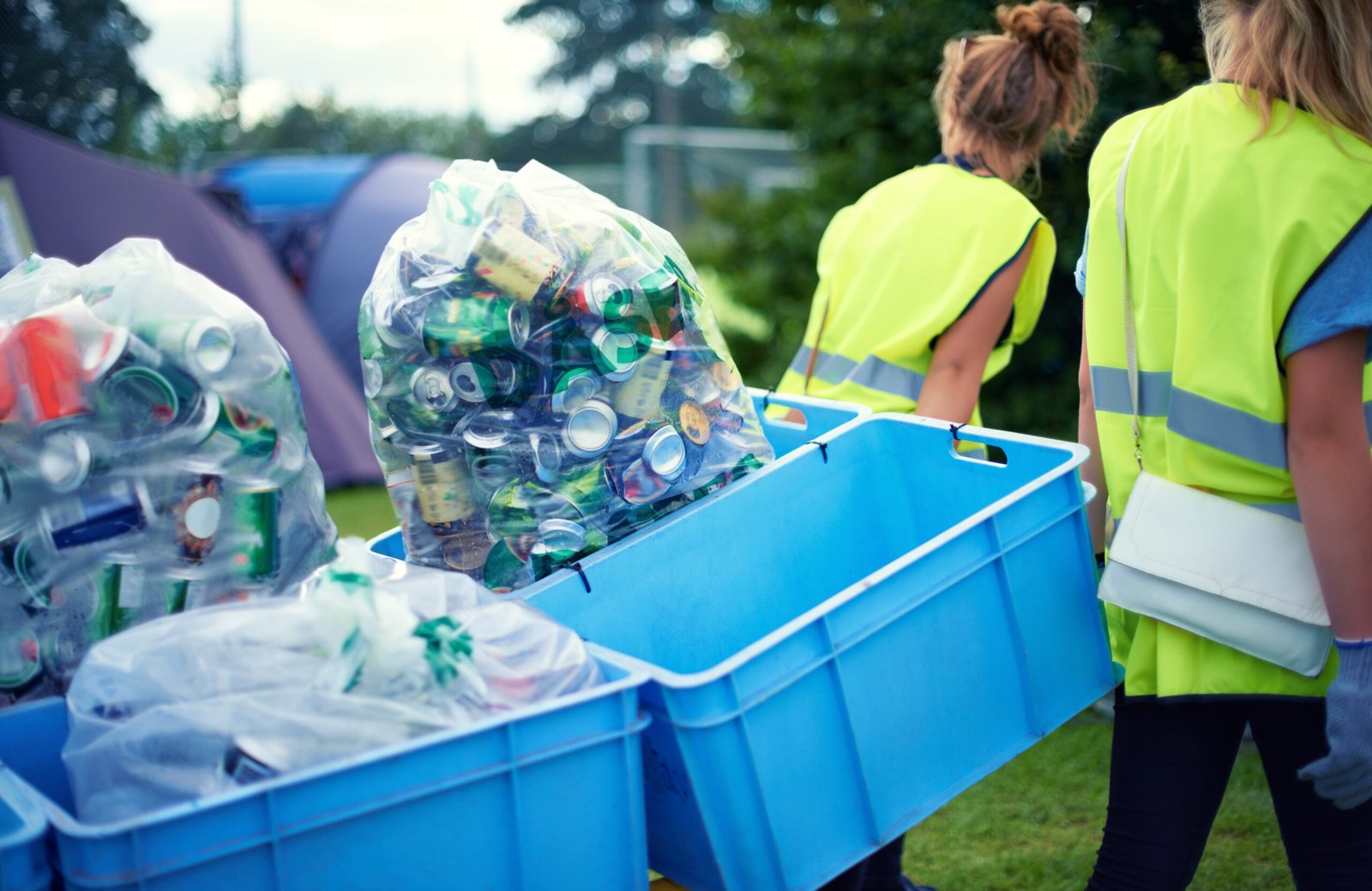
That said, anyone in Amsterdam has seen the active hunts for can and bottles during King’s Day, and the people standing with massive bags at places like the AH behind Dam Square, taking forever to empty the bag of cans and bottles fished from the garbage system. It’s the dual nature of the recycling system: someone is probably trying to recycle the materials for the cash, and a lot of tourists who really don’t care about the deposit.
The Dutch pragmatism: not everything can, or will, be recycled
Underneath all of this sits an attitude that’s distinctly Dutch and worth naming honestly: an acceptance that perfect circularity is not currently achievable, paired with a government target that assumes it eventually will be, or reasonably close. The official goal is that by 2050, no new plastic packaging will be made from newly extracted oil — everything either recycled or made from renewable feedstocks like corn or sugarcane. The RIVM’s own 2024 assessment, run with Utrecht University, Rijkswaterstaat and TNO, put the current recycled-content share of Dutch plastic packaging at just 7 percent, and concluded flatly that the 2050 target cannot be reached under current policy or production methods.
That gap between ambition and infrastructure doesn’t produce paralysis, in the Dutch policy style — it produces triage. Money and regulation go toward the fixes with the clearest payoff (deposit machines, metal sorting, district-heating incinerators), while genuinely hard problems (multi-layer flexible packaging, contaminated mixed plastics, the quarter of collected plastic that gets exported with no fate-tracking) get acknowledged in official reports rather than solved. The 2024 evaluation of the deposit system is a good example of the pattern: regulators know the 90 percent legal target is being missed, they know why, and their response is a menu of adjustments — a bonus scheme, more drop-off points, deposits on juice and dairy bottles — rather than a claim that the problem is fixed.
There’s something to respect in that candor. Dutch official documents are unusually willing to publish the finding that a policy target is being missed, or that a headline recycling statistic is measuring the wrong thing. There’s also something to be skeptical of: acknowledging a problem in a parliamentary letter is not the same as closing the export-tracking gap, and the EU’s own waste-shipment rules meant to trace exported plastic’s fate don’t take effect until 2026. For now, a Dutch shopper doing everything right — separating PMD, returning bottles, buying the loose vegetables when available — is participating in a system that is honestly better than most of Europe’s, and still leaks, still burns imported garbage, and still can’t say with confidence where a quarter of its plastic actually ends up.
Sources
- CBS — End of a downward trend: more waste collected in 2024
- NL Times — Dutch binned 449 kg of garbage per person last year
- DutchNews.nl — Dutch recycling strategy needs a rethink
- Rebel/WUR (Tweede Kamer document) — Haalbaar recyclingpercentage kunststof verpakkingsafval 2025
- Wageningen University & Research — Models of the recycling chain for Dutch plastic packaging
- Wageningen University & Research — Share of recyclable packaging on the Dutch market, 2021 update
- European Environment Agency — Netherlands municipal waste country profile
- DutchNews.nl — Dutch poised to halt importing waste due to AEB crisis
- letsrecycle.com — Dutch government lays RDF tax proposals
- IamExpat — Statiegeld deposit cuts amount of cans littered by a third
- Utrecht University — Evaluation of deposit scheme: collection still below legal target
- IamExpat — Statiegeld bottle deposits could double next year, says Dutch inspectorate
- Utrecht University science communication project — Responsibility for Ocean Plastic (Dutch plastic waste data)
- RIVM — 2050 circular plastic packaging target assessment
- FreshPlaza — Plastic on the shelf irritates consumers
- VU Amsterdam — How sustainability scores help make greener choices
- NL Times — Dutch supermarkets to reduce packaging by 20% by 2025