With King’s Day on April 27 just weeks away, here’s why the Netherlands turns buying other people’s stuff into a national sport — and where to join in year-round.
There’s a moment every King’s Day that stops first-time visitors in their tracks. Somewhere between the orange wigs and the canal boats, they notice that the entire country, every park, every street corner, every patch of pavement, has been covered in old junk. Lovingly sorted old junk. Priced old junk. Old junk with someone standing beside it, ready to negotiate.
It’s not a car boot sale that got out of hand. It’s the vrijmarkt — the free market — and it is one of the stranger and more wonderful national traditions in Europe.
The One Day You Can Sell Anything, Tax-Free
Every year on April 27, King’s Day (Koningsdag) marks the birthday of King Willem-Alexander. The streets flood with orange. But what makes the day genuinely unlike anything else is this: it is the only day in the calendar when the Dutch government permits street sales without a permit and without VAT. No bureaucracy, no license, no tax man. Just a blanket, your attic contents, and a willingness to haggle.
The vrijmarkt isn’t new. It evolved over decades from a children’s tradition, kids setting up small stalls to sell toys and games, into a country-wide secondhand economy that runs from before midnight on King’s Night right through to late afternoon the next day. In Utrecht, the markets start on the evening of April 26 and carry on through the night. In parts of Amsterdam, the prime spots used to be marked with duct tape at midnight, claimed like beach chairs on a German holiday.
“As per the original children’s secondhand market tradition, the flea market remains a large part of the celebrations,” says Amsterdam local and travel guide Frank, in an interview with Insight Vacations. “The tradition is that every family, on King’s Day, can sell anything. This might be the secondhand stuff from the attic or cellar. You put your things down and you sell the stuff.”
In Amsterdam specifically, the children’s flea market in Vondelpark is its own institution — hundreds of kids selling toys and books. It’s chaotic, it’s sweet, and it teaches an eight-year-old how to close a deal.
It’s Not ONLY One Day
Here’s what the vrijmarkt does that’s clever: it frames secondhand shopping as an event. A party. Something you dress up for (in orange). And that framing has seeped into Dutch culture all year round.
The Netherlands has one of the most developed secondhand ecosystems in Europe, built across three distinct layers.
Kringloopwinkels — the backbone. The word means “circulation shop,” and that’s exactly what they are: charity thrift stores stocking furniture, clothes, electronics, bikes, and books, run by nonprofits focused on sustainability and employment. Prices are unbeatable (think €2 for a mug, €20 for a chair, €100 for a sofa), and serious shoppers know to go early in the week when the best weekend donations come in. Major national chains include RataPlan (founded 1982, 40+ stores across North Holland, South Holland, and Flevoland), Emmaus (14 communities, 20 stores), Het Goed, and Terre des Hommes, which runs over 40 shops to fund children’s rights work. The Salvation Army’s ReShare Stores round out the major chains. Collectively, they are everywhere.
Marktplaats — the digital kringloop. Think Dutch Craigslist, except actually used. The platform has an almost limitless catalogue — bikes, wardrobes, plants, sofas — and a culture that expects you to negotiate 10–15% below asking price, pay in cash, and pick up in person. It’s a bit of a ritual in itself.
Vintage boutiques — for the curated end of the market. Amsterdam’s Episode has been running since 1969 and now has five city locations plus outposts in other European capitals. Mood Indigo on Damstraat is the go-to for denim obsessives. Down in Rotterdam, Bobby Pin Boutique Vintage has its following. Vintage Island has stores in Leiden, Haarlem, and The Hague.
The IJ-Hallen Factor
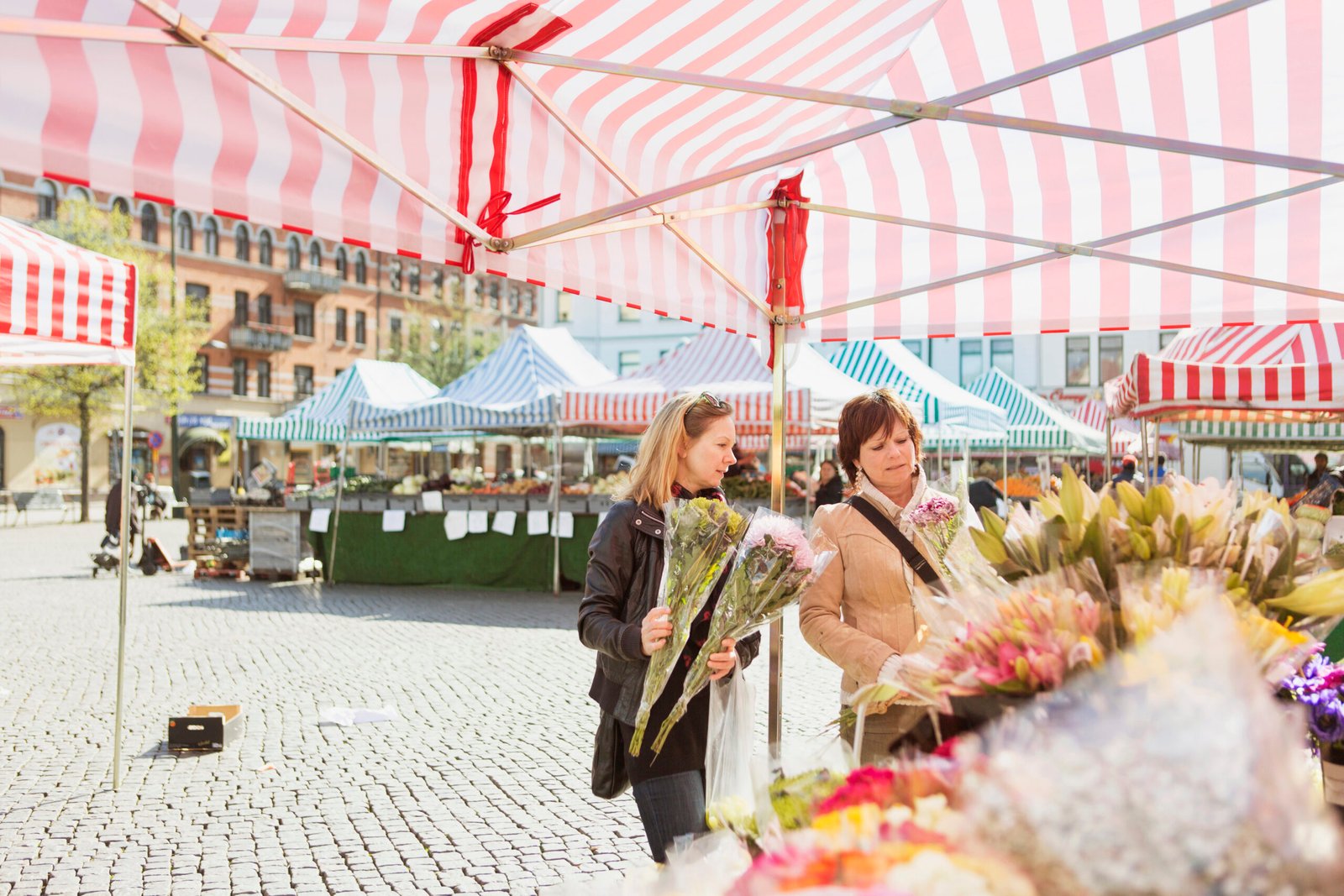
Once a month, a former shipbuilding warehouse in Amsterdam-Noord becomes what many call the largest flea market in Europe. IJ-Hallen at NDSM Wharf runs across two massive industrial halls plus the outdoor terrain — 750 stalls on a good day — and the only way in is a free 15-minute ferry from behind Amsterdam Centraal.
You’ll find roughly two-thirds of the stalls selling vintage and secondhand clothing, and the rest covering furniture, vinyl, antiques, cameras, bikes, and genuinely eccentric bric-a-brac. Entry is €6 for adults, €10 for early entry if you want first pick. Sellers book spots from €34 and they go fast. The next edition is April 11–12, 2026 — just two weeks before King’s Day, if you’re warming up.
Waterlooplein and the Permanent Markets
Amsterdam’s oldest market, Waterlooplein, has been running since 1885 — the same year Princess Wilhelmina’s fifth birthday was first celebrated as what would eventually become King’s Day. It runs six days a week (closed Sundays) from 9:30 to 17:00, with around 300 stalls selling secondhand clothing, antiques, leather goods, and whatever urban miscellany washes up. In recent decades it has drifted younger, with more streetwear and vintage alongside the old-school junk.
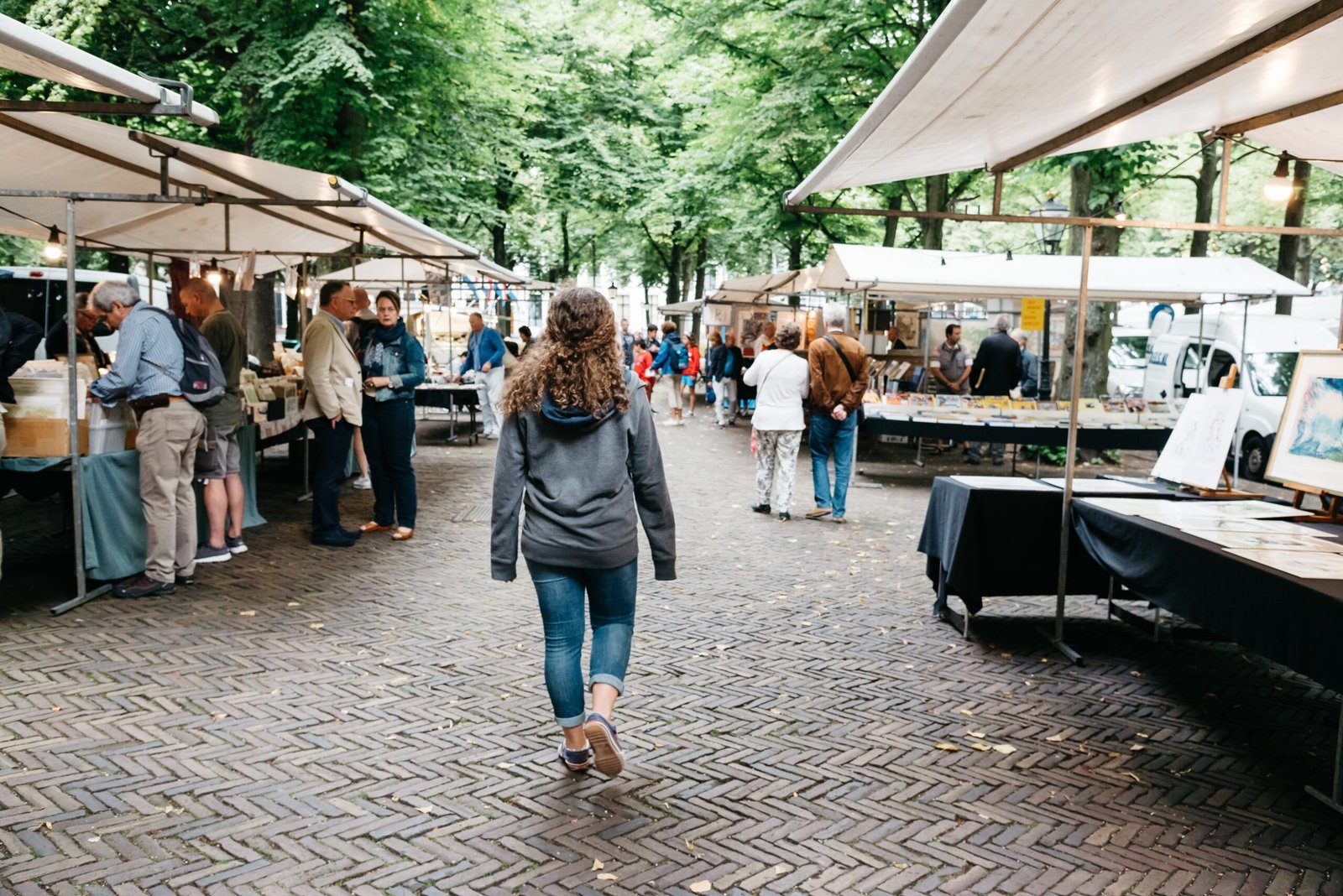
The Noordermarkt in Jordaan runs on Saturdays and has a strong antiques section alongside its organic food market. For book lovers, the Spui book market runs daily. And a few times a year the Elandsgracht hosts an antique fair that draws serious collectors.
Beyond Amsterdam
The rest of the country keeps up. In Beverwijk, De Bazaar — recognised as the largest indoor market in Europe across a different measure — runs every weekend with over 1,000 stalls selling spices, secondhand clothing, jewellery, and local produce. It’s part flea market, part souk, part social event, and worth the 30-minute train journey from Amsterdam.
Rotterdam has the Kaai Markt on the Maas riverfront — vintage furniture, clothing, vinyl, and books in a setting that’s hard to beat. Eindhoven’s FeelGood Market at Strijp-S runs every third Sunday with secondhand, handmade, and vintage stalls and a food market atmosphere. Utrecht’s Vreeswijk neighbourhood hosts one of the most well-regarded King’s Day vrijmarkten in the country.
King’s Day 2026: Where and When
King’s Day falls on Monday, April 27, 2026. The vrijmarkten start on Sunday April 26 (King’s Night) in many cities and run through the day.
| Market / Event | City | When | Notes |
|---|---|---|---|
| Vrijmarkt — King’s Day | Nationwide | April 27 (some start April 26 evening) | Every park, square, and street; tax-free, no permits |
| Vondelpark Children’s Market | Amsterdam | April 27 | Kids’ toys, books, games |
| Vrijmarkt Utrecht (Vreeswijk) | Utrecht | Starts April 26 evening | One of the best outside Amsterdam |
| Vrijmarkt Rotterdam (Nieuwe Binnenweg, Hillegersberg) | Rotterdam | April 27, ~9am–4pm | Multiple neighbourhoods |
| Vrijmarkt Nijmegen (Goffertpark) | Nijmegen | April 27, 9am–4pm | Large grass field, hundreds of sellers |
| Vrijmarkt Leeuwarden | Leeuwarden | April 27, 8:30am–5pm | Largest in Friesland |
| IJ-Hallen | Amsterdam-Noord | Monthly weekend (next: April 11–12, 2026) | Europe’s biggest flea market; ~750 stalls; €6 entry |
| Waterlooplein Markt | Amsterdam | Mon–Sat, 9:30–17:00 | Year-round; oldest market in Amsterdam (1885) |
| Noordermarkt | Amsterdam (Jordaan) | Saturdays | Antiques + organic food |
| De Bazaar Beverwijk | Beverwijk | Weekends | 1,000+ stalls; largest indoor market in Europe |
| Kaai Markt | Rotterdam | Monthly Sunday | Vintage on the Maas riverfront |
| FeelGood Market | Eindhoven (Strijp-S) | 3rd Sunday of month | Vintage, handmade, food; special flea edition May 3 |
| Spui Book Market | Amsterdam | Daily | Secondhand and antiquarian books |
Why Does This Keep Working?
Some of it is practical. The Netherlands is small, dense, and urban. People move a lot. Apartments are small. There simply isn’t room to hoard, and kringloops provide a socially acceptable exit for things you can’t take to a new place.
But there’s also something cultural here that doesn’t reduce cleanly to pragmatism. The vrijmarkt started as a political manoeuvre — in the 1880s, liberal government officials were looking for ways to promote national unity around a monarchy that was genuinely unpopular. They hit on Princess Wilhelmina’s birthday as neutral ground, and over generations it evolved into something they couldn’t have planned: a day when the whole country simultaneously declutters and socialises. By the time Queen Beatrix moved the vrijmarkt from the outskirts of Amsterdam into the city centre in the 1980s — partly to occupy space where protests might otherwise gather — it had already taken on a life of its own.
Today it is less about politics and more about the strange pleasure of buying a stranger’s old lamp and feeling like you won something. Which, if you got a good price, you probably did.
Useful Links
- IJ-Hallen — NDSM Wharf, Amsterdam-Noord (monthly)
- Waterlooplein Markt — Amsterdam (Mon–Sat)
- Noordermarkt — Amsterdam Jordaan (Saturdays)
- De Bazaar Beverwijk — Beverwijk (weekends)
- Kaai Markt Rotterdam — monthly Sunday
- FeelGood Market Eindhoven — 3rd Sunday monthly
- RataPlan kringloopwinkels — 40+ stores, North and South Holland
- Marktplaats — secondhand listings across the Netherlands
- Episode vintage stores — Amsterdam (5 locations) and beyond
- Spui Book Market — Amsterdam, daily
King’s Day 2026 is Monday, April 27. The vrijmarkten start on Sunday evening, April 26. Go early. Bring cash. Wear orange.